Coffee Corners
Coffee Bar Ideas for Small Spaces (and Rental Counters)
This post contains affiliate links. As an Amazon Associate we earn from qualifying purchases, at no extra cost to you.
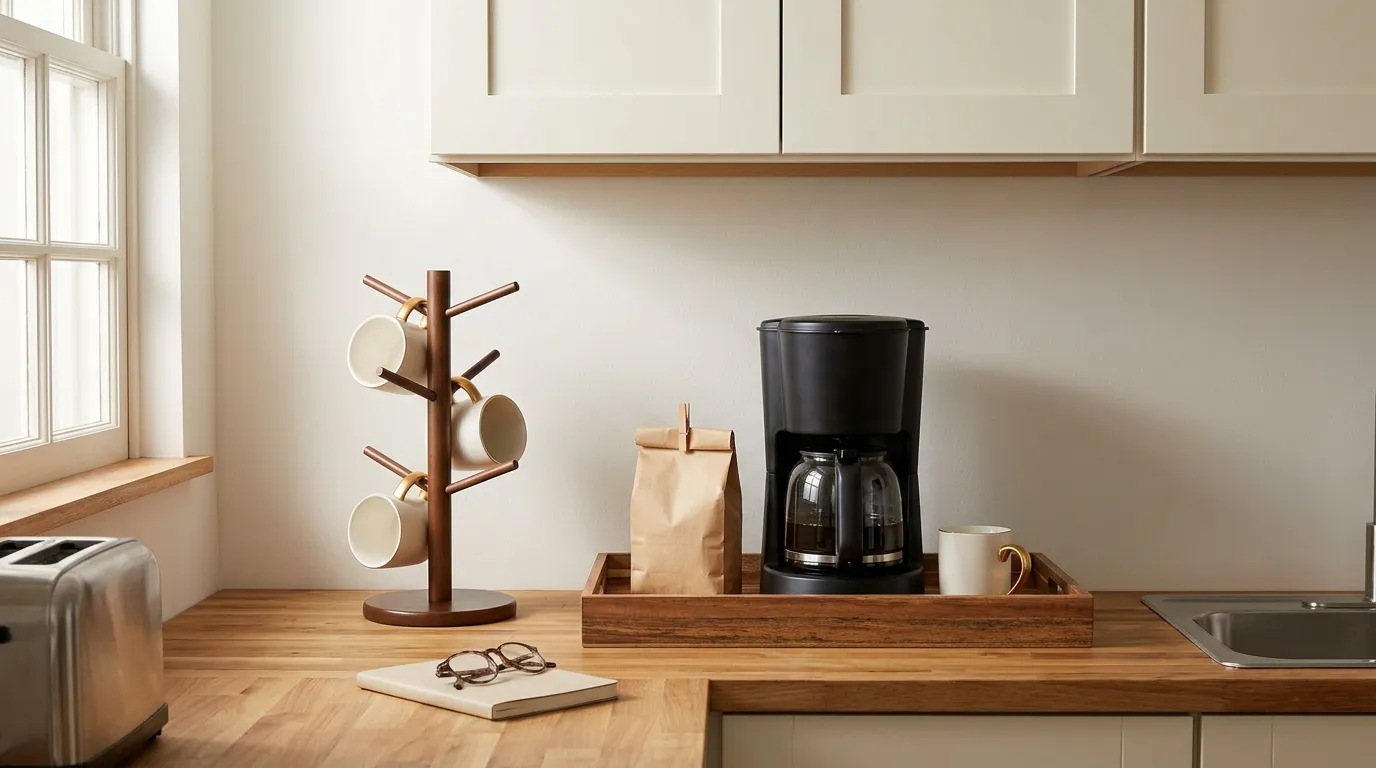
Coffee bar ideas get written for people with a spare sideboard. You have eighteen inches between the toaster and the sink, a lease that says no holes in the walls, and a bag of beans currently living in the cabinet with the cereal.
That's a different problem, and it has a different answer. A small coffee station isn't a shrunken version of the big ones on Pinterest. It's a setup where every single item has to earn its footprint, because there are only about six spots to give away.
What should a coffee bar include? Five things: something to define the zone (a tray), something to protect the counter (an absorbent mat), somewhere for mugs that isn't a cabinet (a counter-standing mug tree), closed storage for beans or pods so the packaging stays out of sight, and one or two small tools that improve the coffee itself. Skip anything that only exists to be photographed.
That list is also how you build a home coffee bar on a budget, because four of the five cost less than a bag of good beans. The picks below are built around it. Nothing needs a drill, and nothing needs an outlet of its own.
If the rest of the kitchen is fighting you too, the same logic runs through our small kitchen must-haves.
Where does a coffee bar go in a small kitchen?
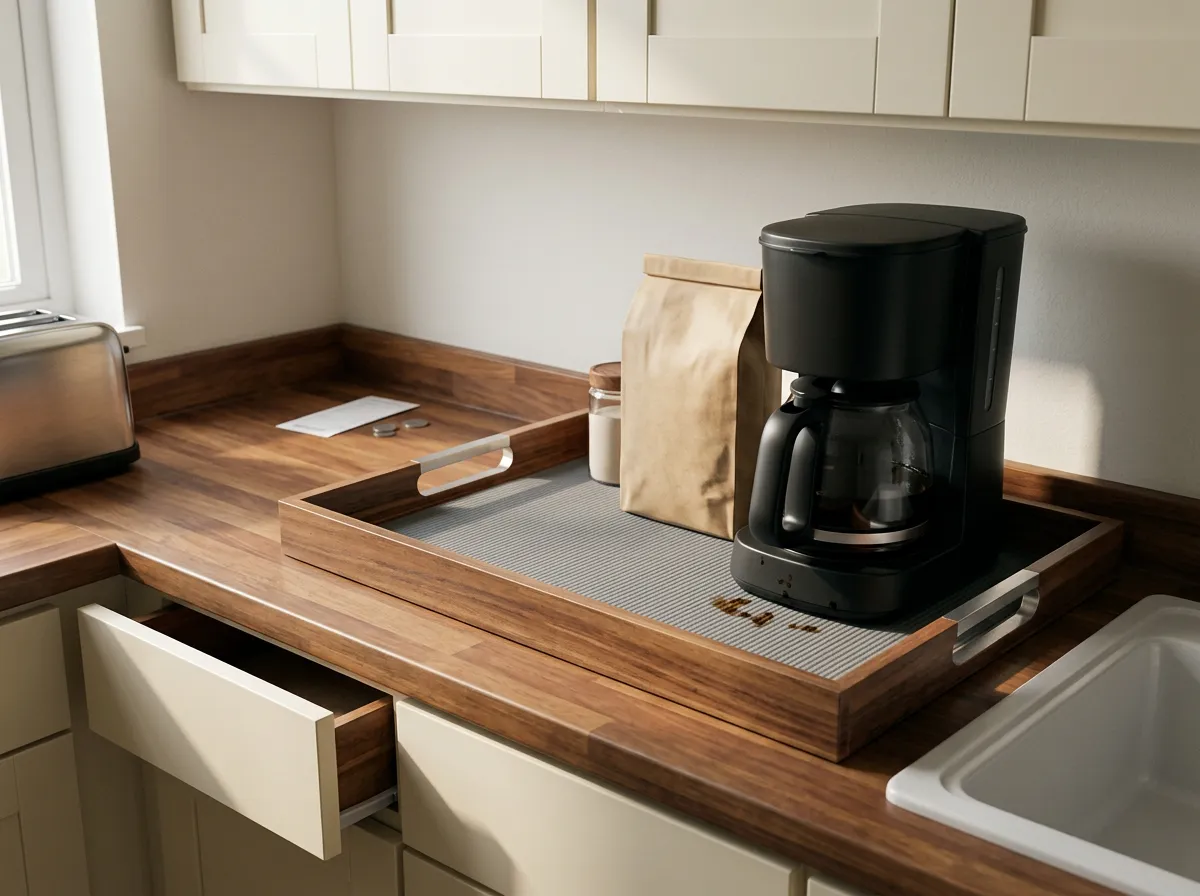
On a tray, not on the counter. This sounds like a decorating tip. It's really a storage one. The moment your coffee things sit on a tray, they stop being loose objects competing with the cutting board and start being one object you can pick up.
That matters most where the counter does three jobs. You need to chop something, so the whole coffee zone slides down two feet and comes back after. No moving six items one at a time.
A tray also draws a border, and borders stop a coffee corner from creeping. Anything that doesn't fit on the tray is a sign you've added too much.
- Measure your gap first, then buy the tray. Most people buy the tray they like and discover it hangs over the edge by an inch. Measure the clear run of counter you can actually spare, then go a size down
- Handles change how it works. A tray without handles is a surface. A tray with handles is something you move, and moving it is the whole point
- Wood over metal near a kettle. Metal trays get loud, and they show every water spot. Wood hides the drips you'll inevitably leave
Then put something absorbent under the machine. This is the pick renters skip and later regret. Coffee doesn't spill dramatically. It gets there slowly: a ring under the mug, a splash of milk, a drip from the pod holder. On a counter you don't own, that's a deposit question.
A rubber-backed mat handles it quietly. The backing grips, so it stays where you put it. When it starts looking like a coffee bar mat, it goes in the wash.
Does the mat replace the tray? No. The mat protects, the tray organizes. Mat under the machine where drips land, tray for what you lift as a group.
Where do the mugs go when the cabinets are full?
Out of the cabinet and onto the counter, vertically. Mugs are the worst-behaved thing in a small kitchen. They don't stack safely, they're too tall for the shelf they're on, and you own more of them than you think you do.
Most advice here tells you to hang them. Under a shelf, on a wall rack, from hooks screwed into the cabinet bottom. All of that needs screws or a landlord who doesn't inspect. Adhesive hooks holding ceramic over a hard floor only have to fail once.
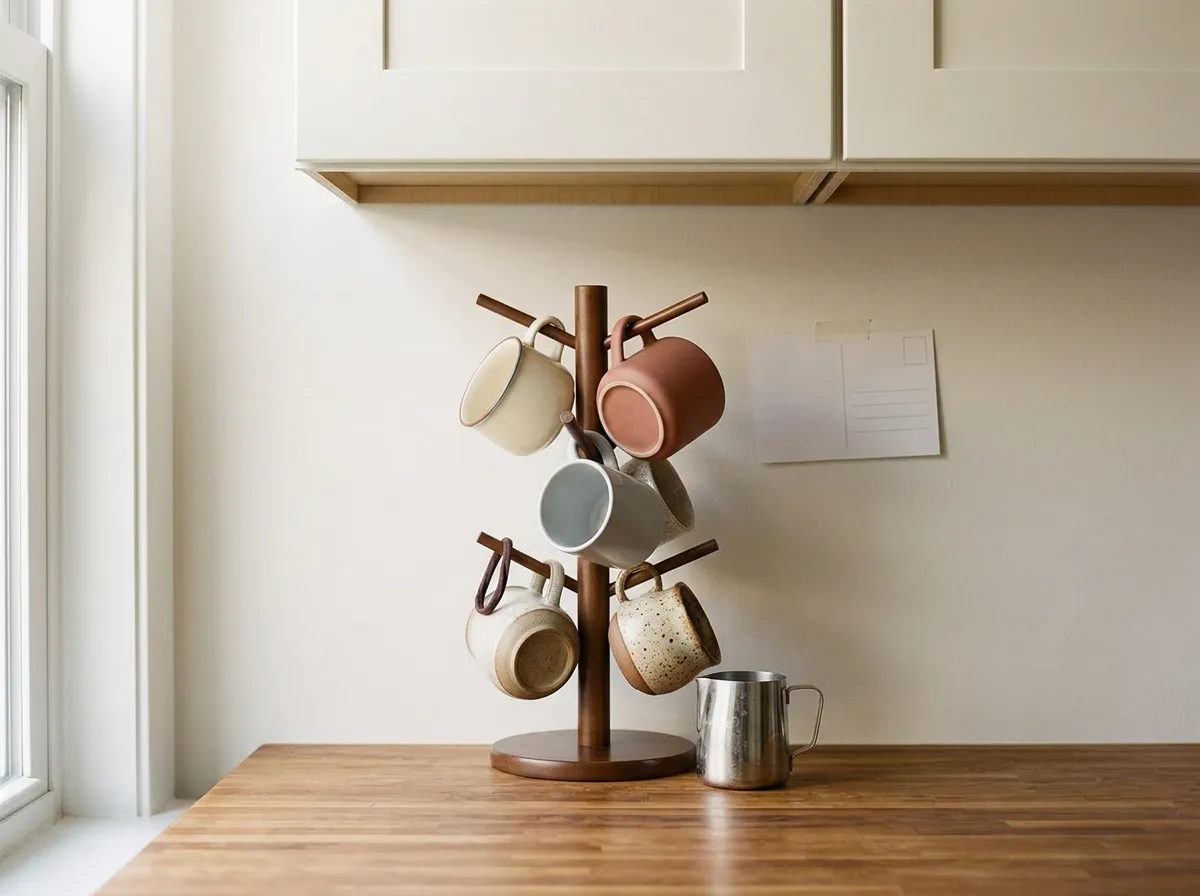
A mug tree sidesteps the whole argument. It's a post with hooks that stands on the counter, so it puts six mugs into the footprint of about one and a half. Zero holes, zero adhesive. It comes with you to the next place.
- Count the mugs you actually drink from. Not the ones you own. Six hooks holds the everyday set, and the rest can stay in the cabinet where they were already fine
- Check the hook spacing against your widest mug. Wide-bellied stoneware mugs on close-set hooks knock together every time you take one off
- A padded base is the difference between stable and tippy. A weighted or padded bottom is what keeps the whole thing upright when you pull a mug from the top hook
There's a quieter benefit too. Mugs on a tree dry properly. In a cabinet they sit rim-down holding a drop of water from last week. If you have no dish rack space, this doubles as where wet mugs go.
Should it live on the tray? Usually not. The tree is the tallest thing in the setup and the most likely to catch a sleeve, so give it its own footing on the counter beside the tray.
Our picks
Similar finds on Amazon
Where should coffee beans and pods be stored?
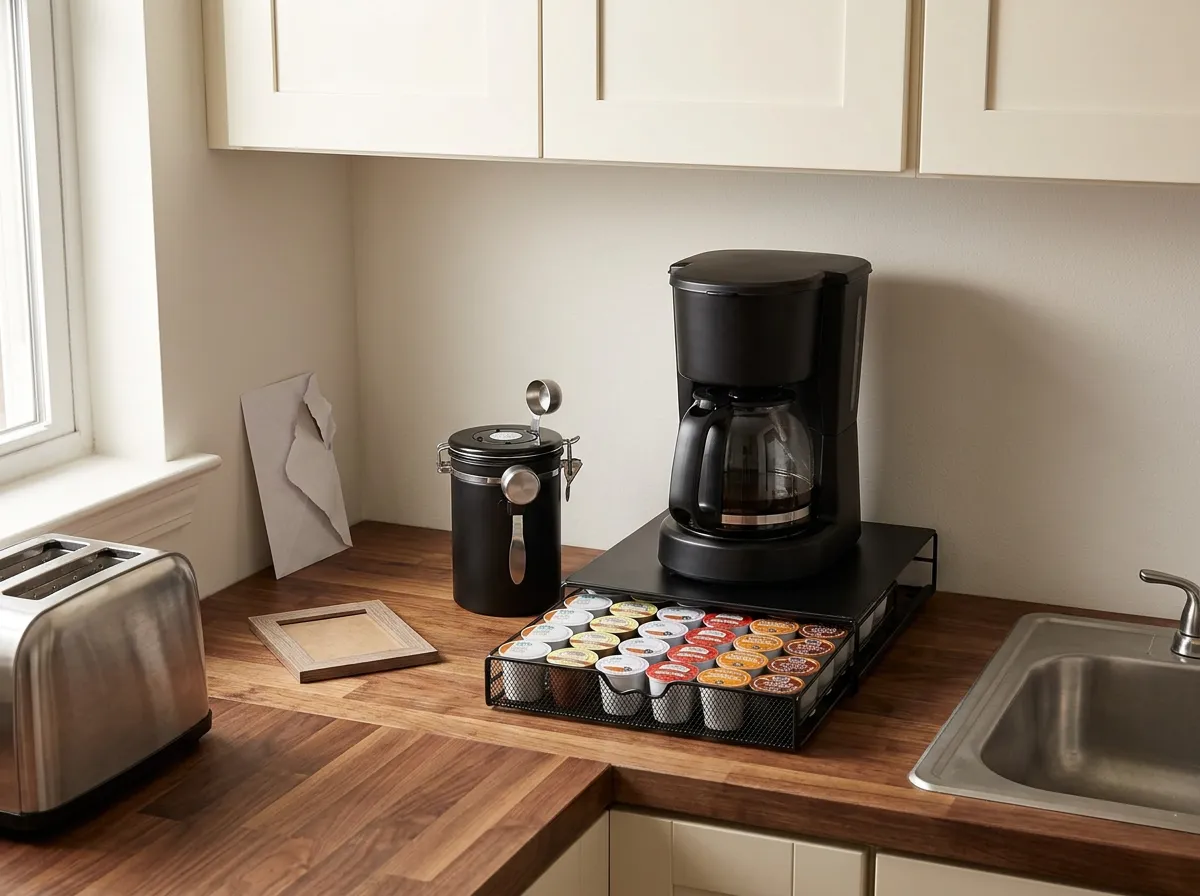
Under the machine if you use pods, sealed and opaque if you use beans. Two different problems get lumped together, and treating them alike is why most coffee corners look cluttered.
Pods come in a box built to catch your eye on a store shelf. On your counter it's just bright and oversized, and it keeps that shape long after it's half empty.
A pod drawer fixes that with space already going to waste. The machine sits on top, so the pair takes up no more room than the machine alone. On an eighteen inch counter, free storage is the only storage.
- Check the machine's base is flat and stable. Most drip and single-serve machines sit fine. Machines with rubber feet at odd heights can rock, so look before you commit
- Capacity beats compartments. A drawer that holds three dozen pods stops you re-stocking constantly, which is the actual annoyance
- Pull the drawer toward the front edge. Sliding it out from under a full machine is easier when the machine sits slightly back
Beans need the opposite thing: darkness and a seal. Coffee goes stale from air, light, and warmth, in that order. The bag it came in is fine for about a week, then it's just a paper bag with a fold in it.
So use an opaque canister sized for one bag. Clear glass on a sunny counter flattens the flavor fastest, and a flour-sized jar leaves half its volume as air against your beans.
The date dial on the lid is the part you'll use daily. Set it the day you open the bag and the guessing stops.
What if you use both? Use both, on opposite sides. Pods under the machine, canister on the tray.
What makes home coffee taste better without an espresso machine?
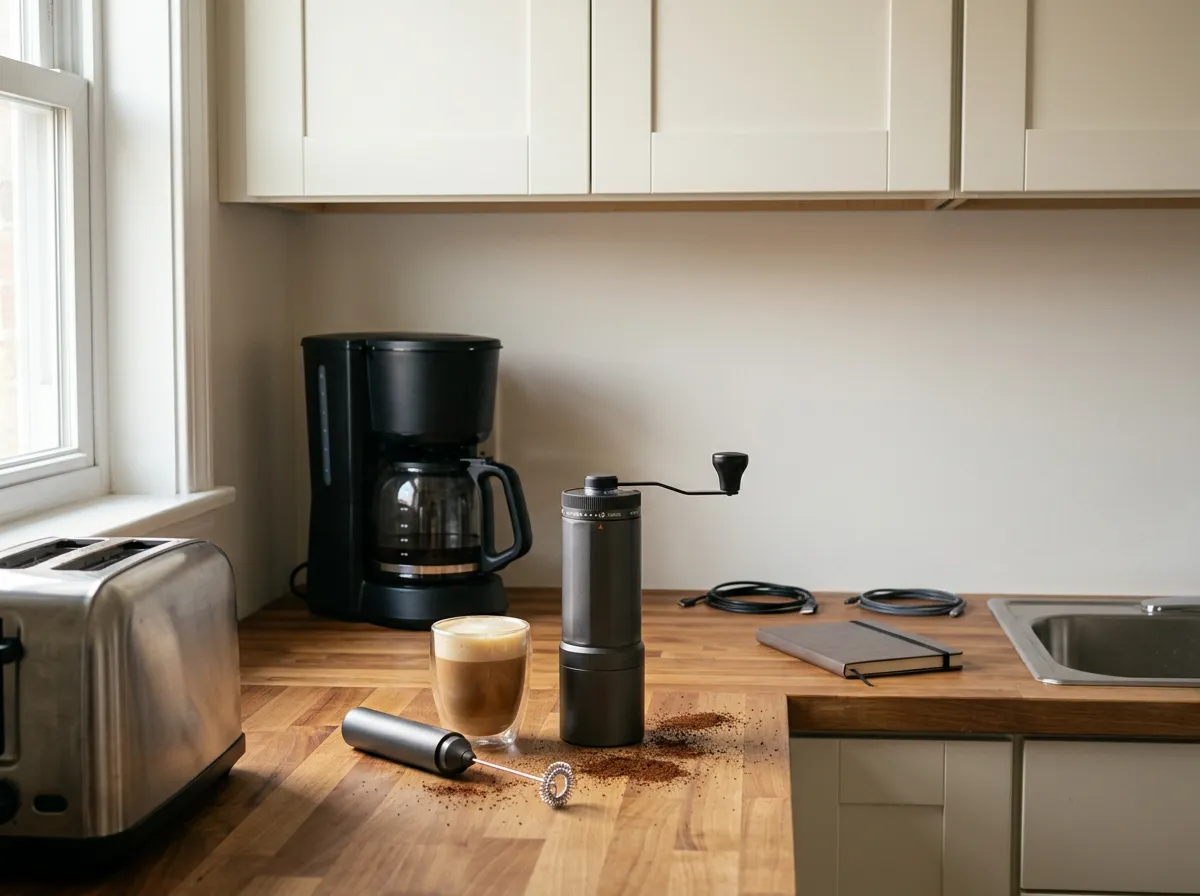
Grinding the beans yourself, and putting air into the milk. Those are the two changes you can feel in the cup, and neither needs an outlet.
Most coffee bar lists skip this for matching syrup bottles. Pre-ground coffee starts fading within about fifteen minutes of grinding. Have the store grind your beans and you're paying for whole beans while drinking pre-ground.
A hand grinder closes that gap. Burrs, not blades: blades chop unevenly, and uneven grounds brew bitter and sour at once. A manual one also beats an electric in a small kitchen. No cord, no motor housing, and it lives in a drawer.
- Look for conical burrs and external adjustment. External means you change the grind without taking the thing apart, which you'll do every time you switch between drip and pour over
- Capacity should match your daily brew. Enough for one full pot means one round of cranking, not two
- It takes about a minute of cranking. Worth knowing before you buy. If that sounds like too much on a weekday, an electric one is the honest answer
Then the milk. What separates home coffee from shop coffee is mostly texture. Shops steam milk until it's thick and glossy, and a handheld frother gets a surprising way there for the size of a pen.
It works on any milk you already buy, hot or cold. Warm it, hold the whisk just under the surface, and stop when the volume roughly doubles.
Is a frother worth it if you drink black coffee? No. It's the one genuinely optional pick here, and the first to cut for a shorter setup.
Both picks beat the decorative stuff onto this list for one reason. They change what's in the mug. Matching syrup bottles change what's in the photo.
If you only buy one thing off this list, buy the tray. It's the pick that makes the other six make sense, because it turns a scatter of coffee things into a zone with edges, and it does that on day one without touching a wall.
The rest can wait for a reason to show up. A canister earns its spot the first morning you taste the flat end of a bag. A frother earns its spot the first time you want a latte at home and don't feel like leaving.
And a small coffee bar is allowed to stay small. Eighteen inches is a real coffee bar if the seven things standing on it are the right seven.
Setting up a whole place at once? The same one-item-one-job rule is how we picked the first apartment essentials, and how we'd warm the rest of the rooms up with cozy home essentials.