
Apartment Living
Small Kitchen Essentials List: 5 Must Haves for a Rental Kitchen
This post contains affiliate links. As an Amazon Associate we earn from qualifying purchases, at no extra cost to you.
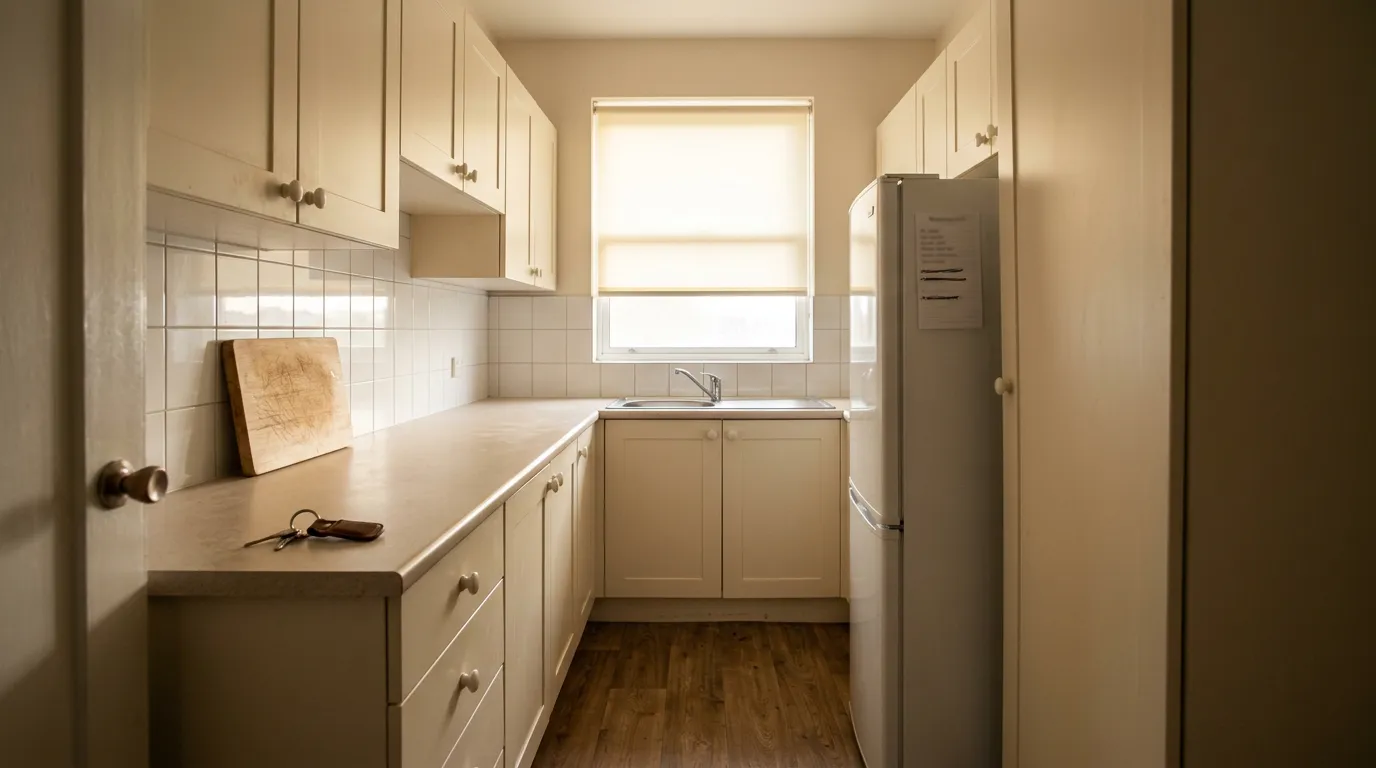
A kitchen essentials list is almost always written for someone who owns their kitchen. What you have is a rental galley: two feet of counter, a lease that bans holes in the walls, and one cabinet you can't reach the back of.
What do you actually need for a first apartment kitchen? The picks worth buying for a small rental kitchen all do one job: they turn space you already pay for into space you can use. A riser that splits a cabinet shelf in two, a rack that fits around the pipe under the sink, a drying rack that rolls into a drawer, airtight canisters standing in for a pantry, and a paper towel holder that sticks under a cabinet. None of them need a drill, and all of them come down when you move.
Not one of these is a gadget. This is small kitchen organization that goes up the week you move in and comes off the wall when you leave, without a single anchor or a patched hole. Setting up everything at once? Start with the broader first apartment essentials, then come back here for the kitchen.
How do you organize a small kitchen with too few cabinets?
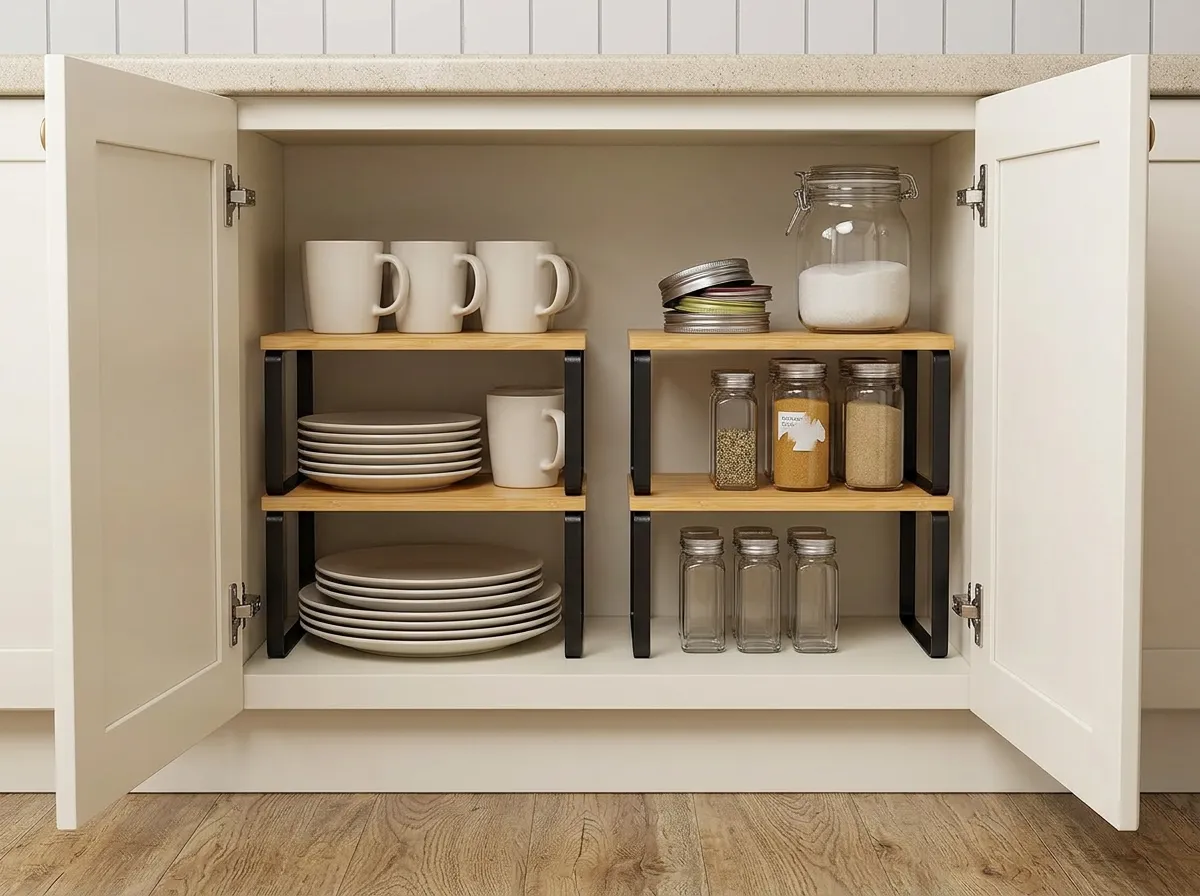
You don't add cabinets, you add floors inside the ones you already have. Most kitchen cabinets waste a band of empty air above every stack of plates. A stackable riser splits that shelf in two, and the mugs stop living on top of the bowls.
Bamboo ones earn their place twice. Inside a cabinet nobody sees them, but they look finished enough to sit out on the counter, holding oil and salt above the clutter line.
- Measure the height, not the width. Cabinet shelves are taller than they look. Stack your plates, put a mug beside them, and measure whatever air is left above
- Two small risers beat one long one. They can sit side by side in a wide cabinet or go into two different cabinets, so neither one goes unused
- Expandable is the renter feature. The next kitchen will have different shelves, and a fixed-width riser fits exactly one cabinet for the rest of its life
Start with the cabinet you open most, usually the one by the sink holding everyday plates. That's where a second level pays for itself the same afternoon you install it.
Do they work out on the counter too? Yes, and that's the honest reason to choose bamboo over wire. A wire riser reads as storage. A bamboo one reads as a shelf, so you can leave it out without the kitchen looking like a stockroom.
What do you do with the space under the sink?
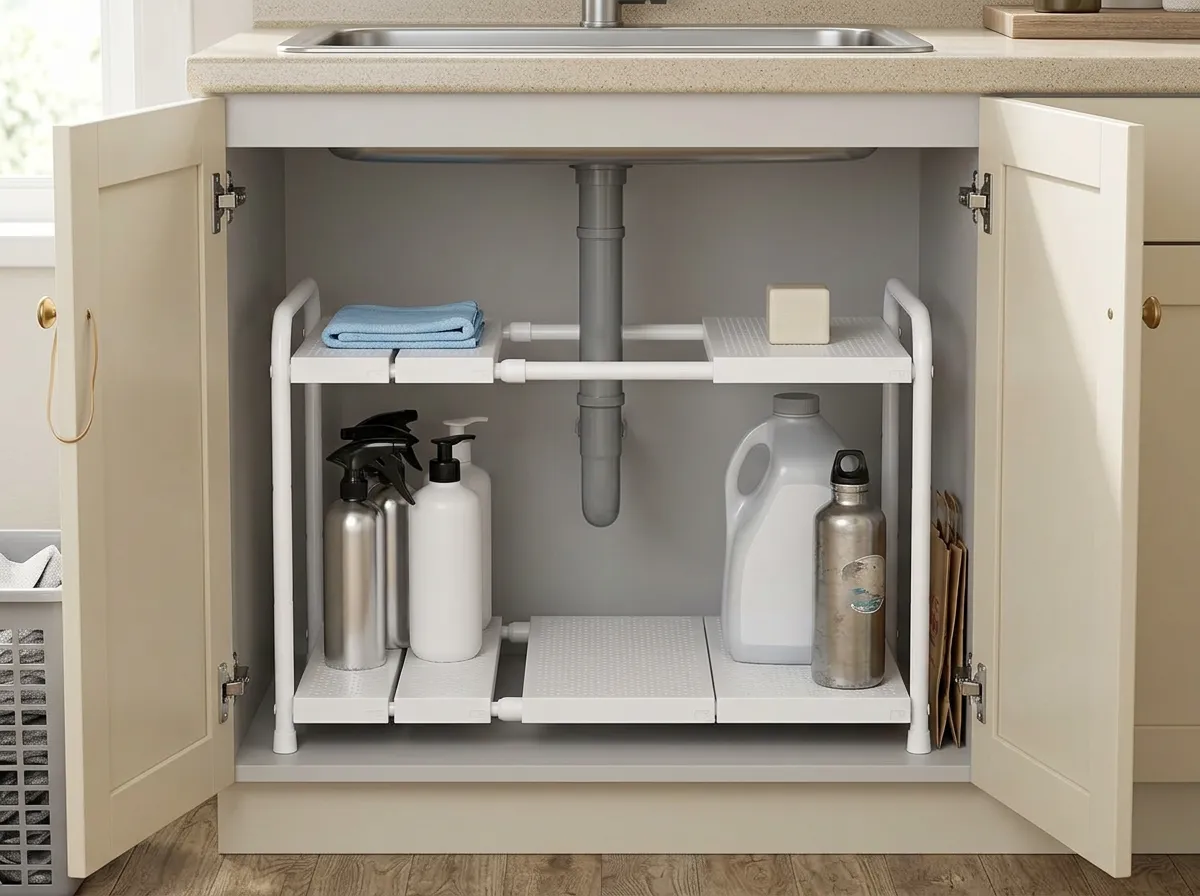
Build a floor around the pipe. The cabinet under the sink is the biggest storage in most rental kitchens and the least used, because the drain trap sits in the middle and the bottles just pile up around it.
An expandable two-tier rack works around that pipe. The width slides, the shelf heights move, and the panels lift out wherever the trap comes through.
- Measure three numbers before you buy: inside width, depth from the door to the back wall, and height under the basin. Most returns happen because only the width got measured
- Tall bottles on the bottom tier, small things up top, so nothing has to come out to reach anything else
- Keep cleaning refills here, not in a cabinet you cook from. Under the sink is the one cabinet in a rental kitchen you never need for food
This is also the cabinet worth doing first. It swallows everything that currently has no home, which is what makes the counter clear later.
Will it fit around a garbage disposal? Usually, once you lift out the shelf panel on that side. That removable-panel design is the whole reason to pick this style over a rack with a fixed deck.
How do you get more counter space in a small kitchen?
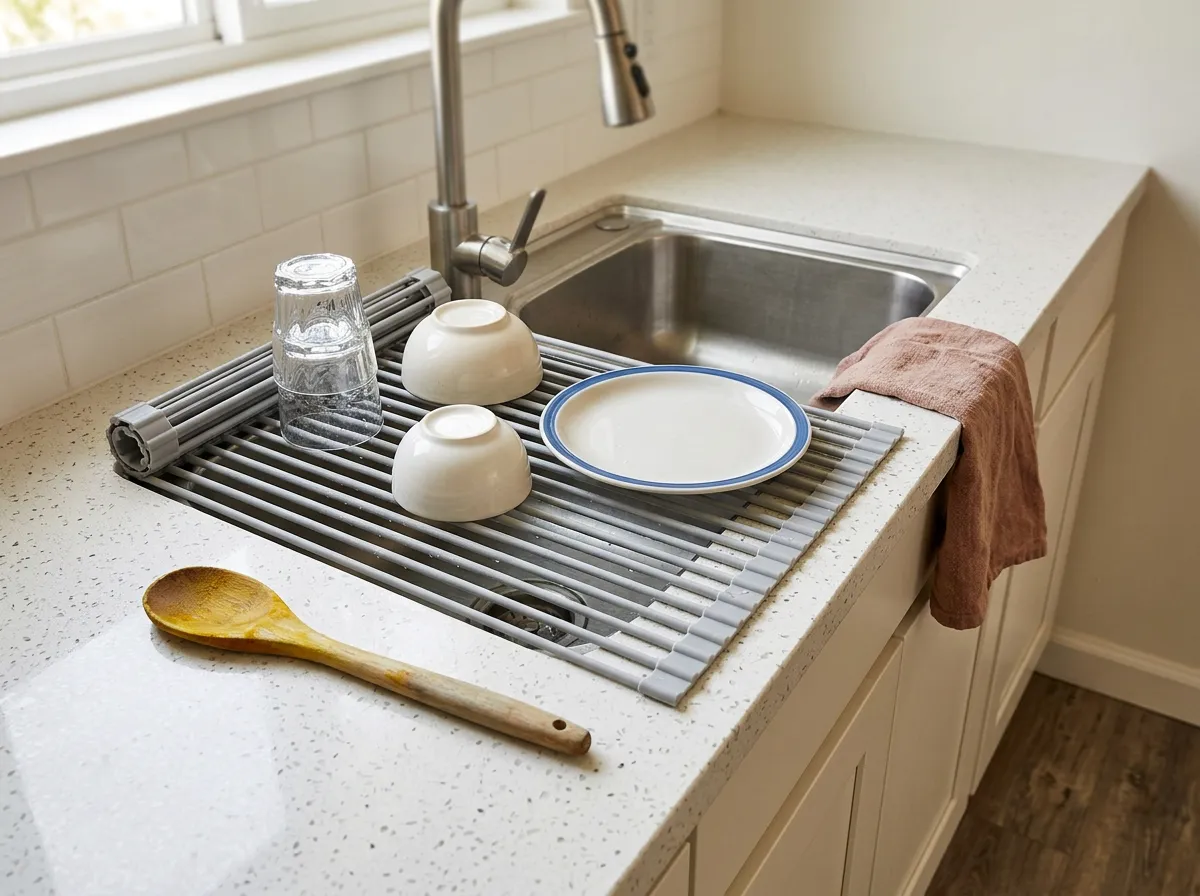
Stop giving permanent counter to something you use twenty minutes a day. A standing dish rack sits out around the clock to dry what amounts to two plates and a pan. In a galley kitchen that's the single largest counter thief you own.
A roll-up rack takes the sink instead. Unroll it across the basin to wash up, roll it into a drawer when you're done, and the counter is empty again before dinner.
- Measure the sink opening, not the rack. It has to bridge the basin with a good inch of support resting on each lip
- Silicone-wrapped bars, not bare rods. Bare steel slides on a wet ledge and leaves marks on the sink over time
- It doubles as a trivet. Heat-resistant enough to take a hot pan straight off the burner, which quietly solves a second counter problem
Warm gray also sits better next to a beige rental counter than chrome does, and a matte finish hides limescale that a shiny one puts on display.
What happens to the water? It drains straight into the sink. No tray to remember to empty, and no ring of standing water creeping toward the counter edge.
Our picks
Similar finds on Amazon
What if your rental kitchen has no pantry?
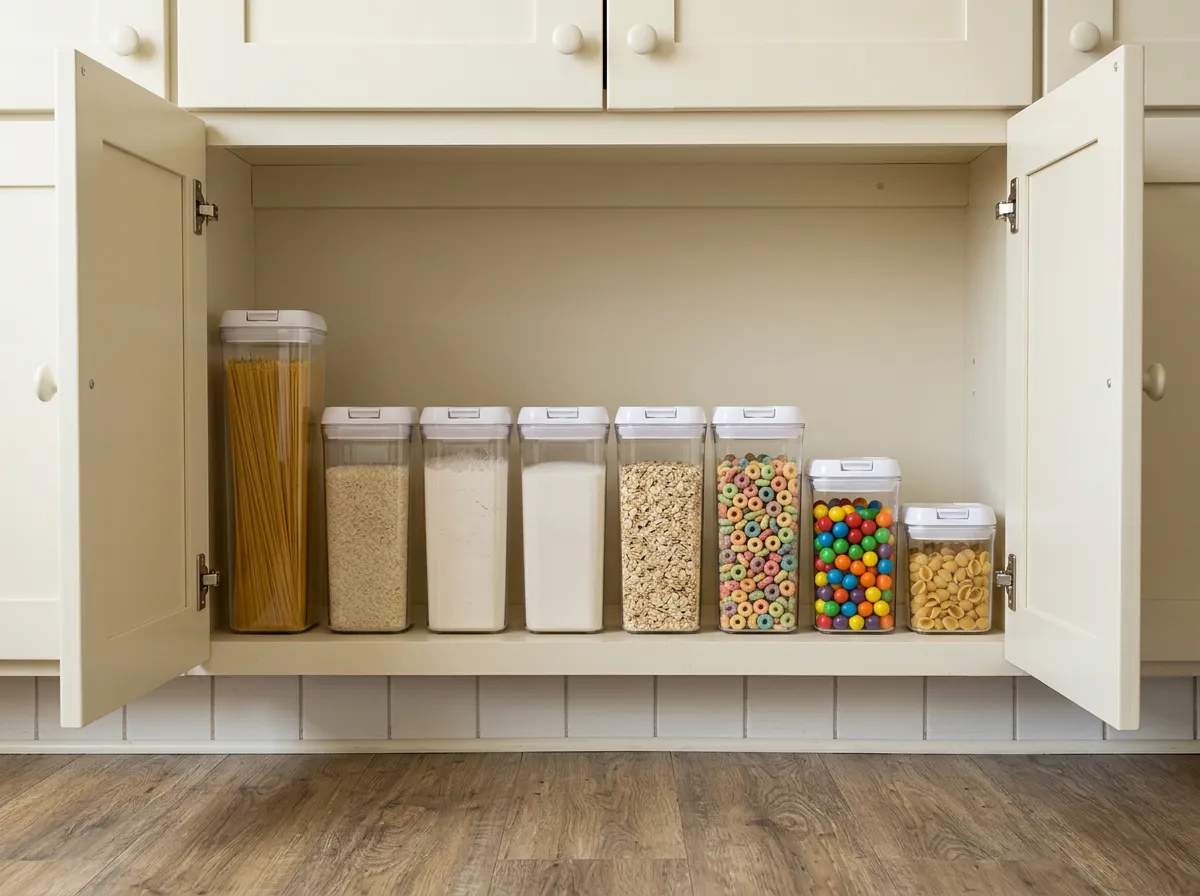
Then the pantry becomes one shelf, and matching containers are what make one shelf enough. Bags of flour and half-rolled cereal boxes waste a third of every shelf in dead air, and they lean on each other until something spills.
Airtight canisters stack square, so a shelf fills to the top instead of stopping at the height of the tallest bag. Clear sides mean you can see the rice getting low without moving anything.
- Decant what you reach for weekly, not everything you own. Flour, sugar, rice, pasta, coffee, cereal. Backstock stays in its packaging
- Square beats round. Round canisters give up the corners, and on a small shelf the corners are most of the shelf
- Label the lids, not the fronts. On a high shelf you're looking down at these, never straight at them
It's also the one change here that a visitor notices. A rental kitchen starts reading as deliberate the moment the dry goods stop being packaging.
Is this actually saving space, or just looking tidier? Both, and the space is the bigger win. Squared-off containers get a shelf's worth of food into roughly two thirds of the shelf.
Where do you put things when you can't drill the walls?
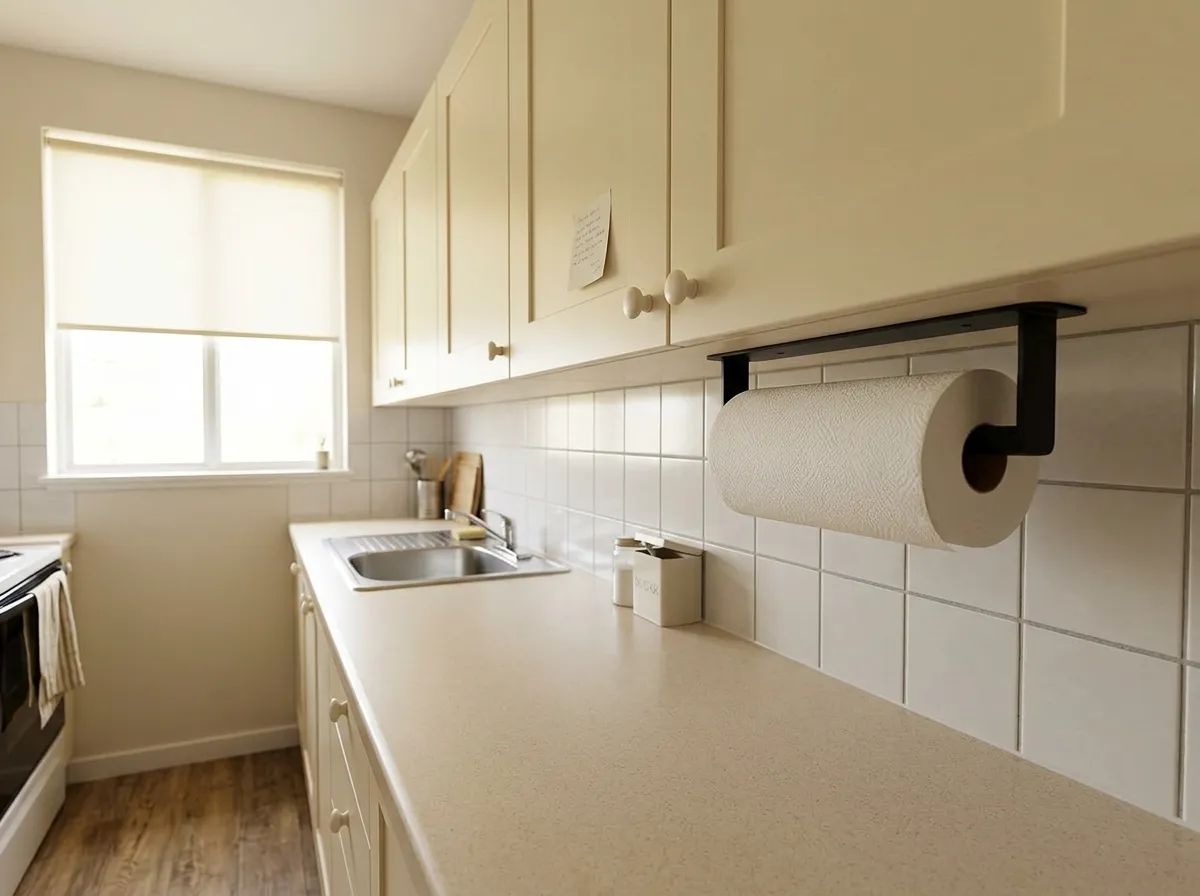
Under the cabinets, on the cabinet doors, and on the side of the fridge. Those three surfaces are a renter's wall, and not one of them needs an anchor or leaves a hole behind.
Start with the paper towels. The roll is the largest single object most people leave standing on a small counter, and an adhesive holder moves it into the dead air underneath a wall cabinet.
- Wipe the surface with alcohol first, then let the adhesive cure overnight before you hang anything on it. Nearly every adhesive failure is a skipped cure
- Mount under the cabinet, not on the wall. The underside is out of sight and it's the surface a landlord is least likely to inspect
- Check how it tears. A one-handed tear needs the roll gripped at both ends, which is the difference between a bar and a hook
The same logic covers the inside of the cabinet doors. Anything flat lives there instead: lids, a cutting board, the shopping list.
Does it come off cleanly at the end of the lease? Adhesive mounts release with heat. A hairdryer for a minute, then dental floss sawed behind the pad. That's the whole argument for these over screws.
What should you skip in a small rental kitchen?
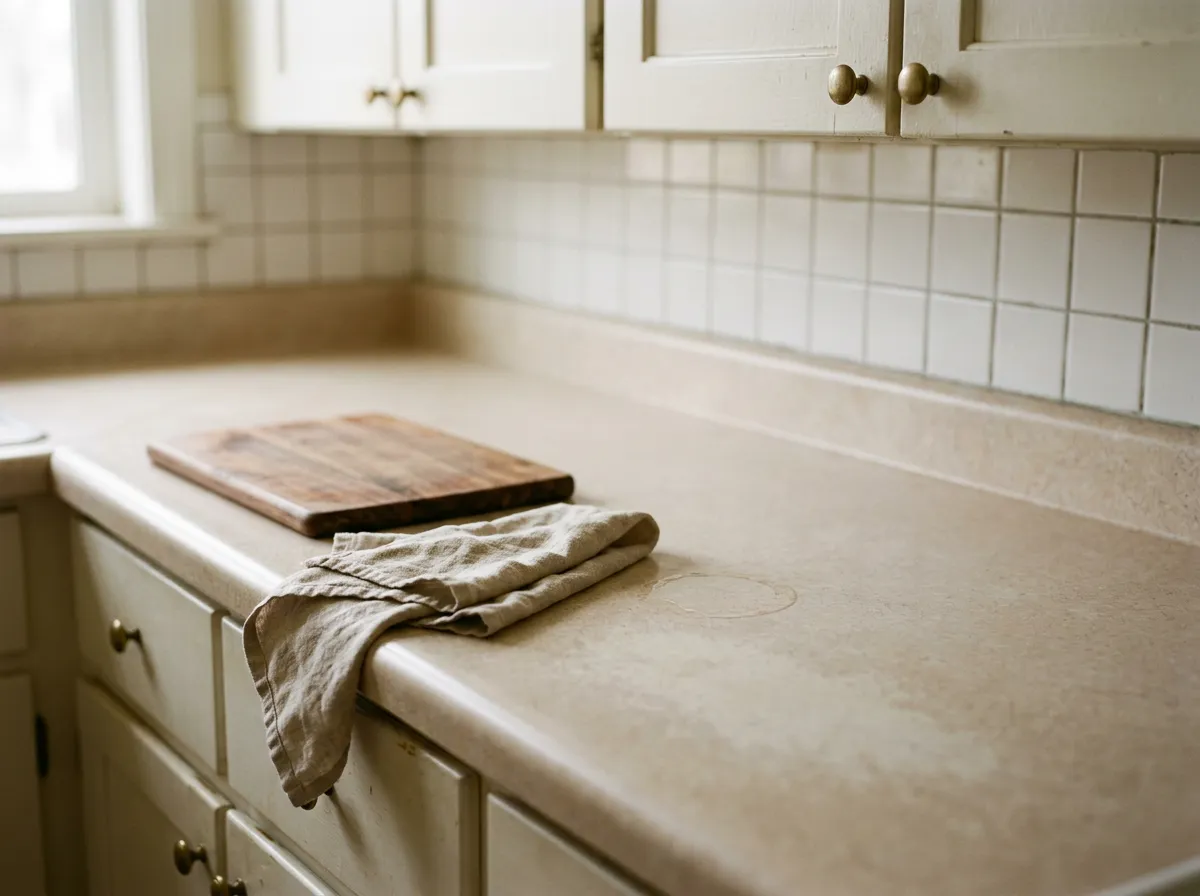
Anything that claims counter permanently, and anything that needs a hole. Those two rules cut most of what gets sold as a kitchen must have, and they're the only two a lease actually cares about.
The classic mistake is the big two-tier dish rack. It's sold as organization, but it holds the best stretch of counter all day to dry what a roll-up rack dries over the sink and then puts away.
- Skip the microwave cart unless the floor is already empty. It buys storage and spends floor, and a rental galley has less floor than counter
- Skip the over-the-faucet caddy. It blocks the only sink you have and drips down the back of the basin
- Skip tension rods in a cabinet with laminate sides. Tension marks the finish, and marks are a deposit conversation
- Skip anything sold as a set of ten, unless you can say where each of the ten will live before the box arrives
The test that survives a move: could you take it down in ten minutes and leave nothing behind? Everything above passes that. A drilled rail does not.
If the budget stretches to one? The under-sink rack. It's the largest empty volume you're already paying rent on, and filling it is what frees up everywhere else.
The space is already in the lease. It's sitting above the plates, around the pipe, over the sink basin, and under the wall cabinet where nothing hangs yet. All any of this does is put a shelf in it.
Do one cabinet this weekend and leave the rest alone. Whatever is still cluttering the counter on Sunday night is the thing to buy next.
If what's cluttering it is the coffee gear, that has its own answer: coffee bar ideas for the eighteen inches beside the kettle.