
Dorm Decor
Dorm Room Organization: 4 Zones That Keep a Small Room From Falling Apart
This post contains affiliate links. As an Amazon Associate we earn from qualifying purchases, at no extra cost to you.
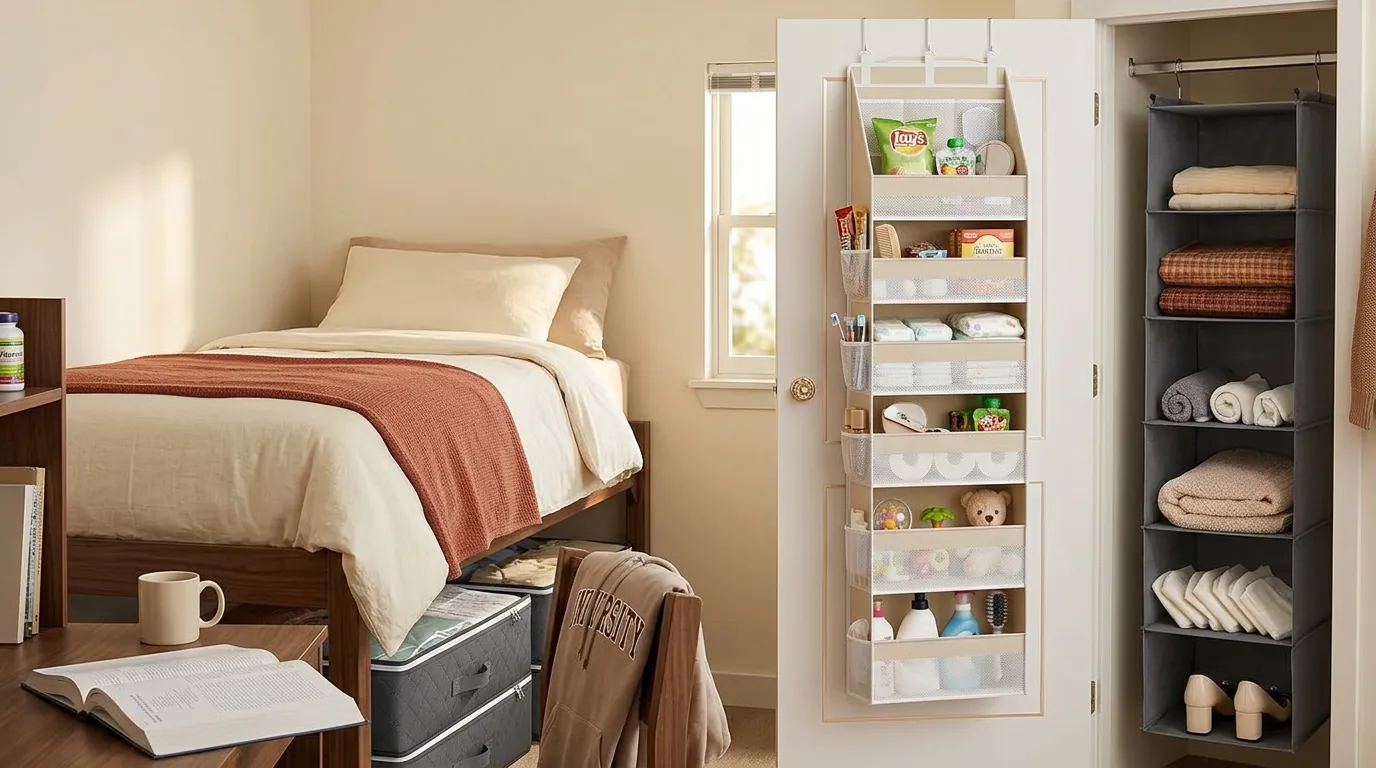
Dorm room organization falls apart in about two weeks. Not because you're messy, but because the room was never designed for two people's worth of stuff. One shallow closet, no dresser, no nightstand, and a door that opens into the only floor space you have.
The fix is four zones. Each one uses space the room already gives you but nobody thinks to claim: under the bed, the closet rod, the back of the door, and the bed rail. Get those four right and everything has a place.
This is not a shopping list (that's our dorm room essentials guide). This is the organizational system: where things go, why that spot works, and the one product per zone that makes it hold.
What's the best storage for under a dorm bed?
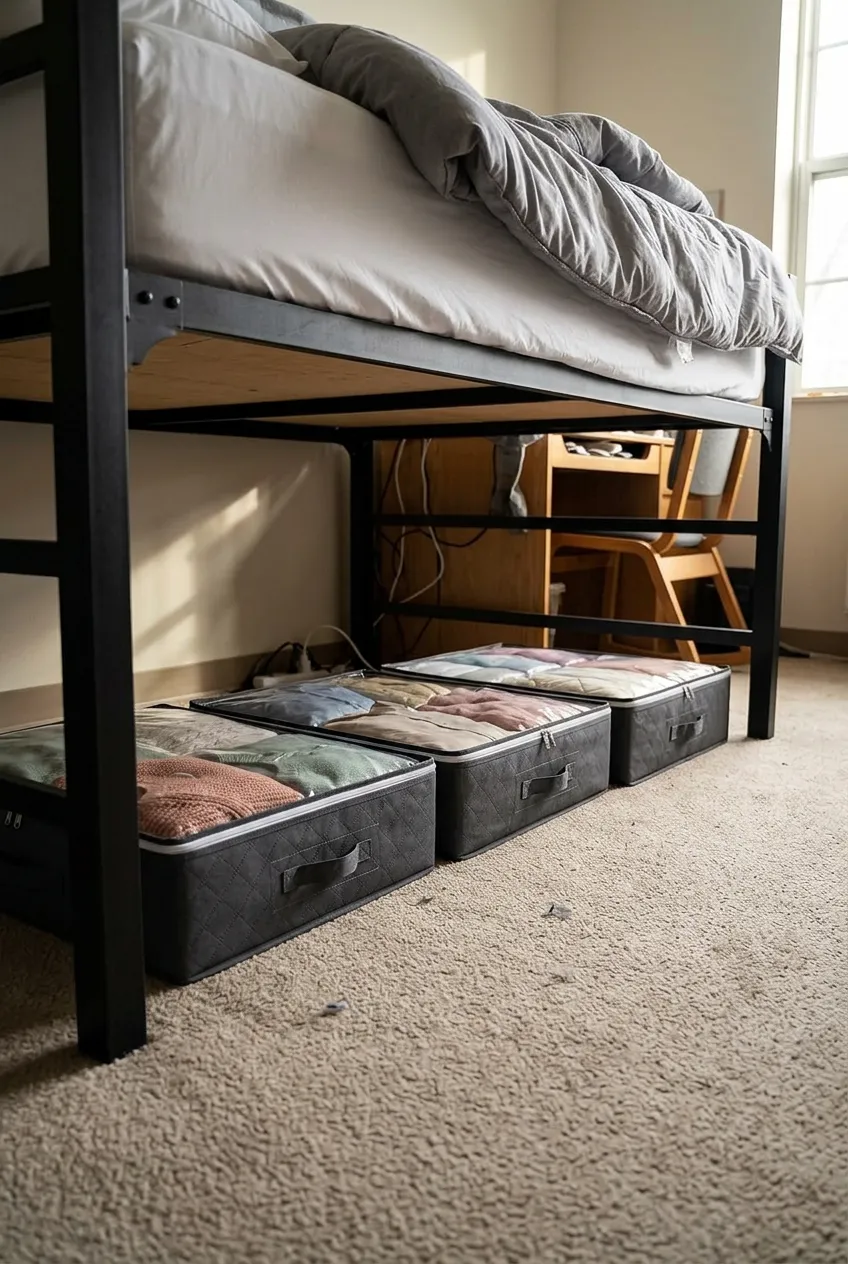
Flat bags for seasonal stuff, wheeled bins for things you grab weekly. The gap under a Twin XL is roughly six inches of dead air. That's enough for four bags of off-season clothes, spare bedding, or shoes you won't need until November.
- Clear-window bags for things you stash and forget (winter coat, extra sheets). Fold flat when you move out
- Wheeled bins for things you pull out every few days (shoes, cleaning supplies, snacks). Roll out without dragging
Pick one type, not both. If most of your under-bed stuff is seasonal storage, the bags are cheaper and stack better. If you're constantly digging under there, wheels save your knees and your patience.
Measure the gap first. Beds on risers give you ten or more inches; standard frames give about six. Bags compress to fit either. Rigid bins don't.
How do you organize a dorm closet with one rod?
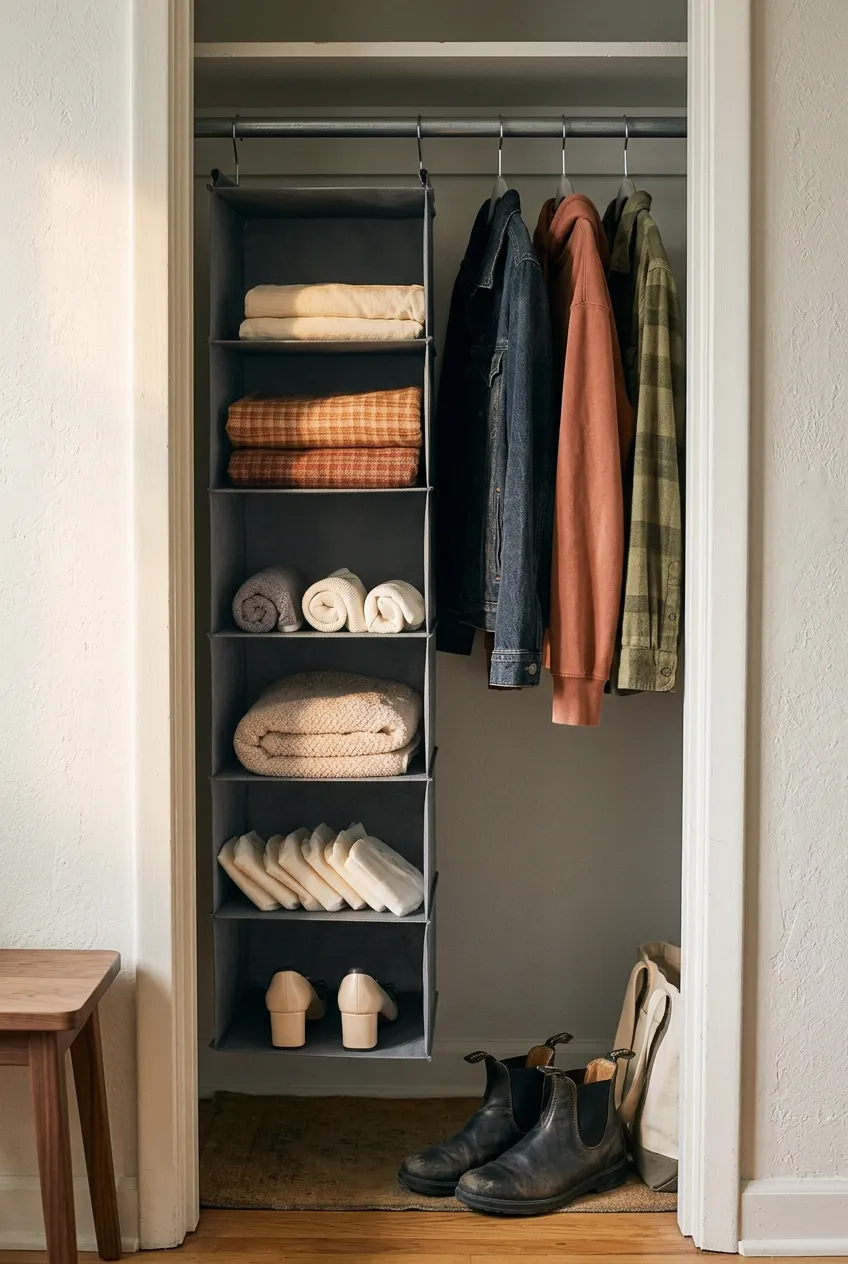
Hang a shelf from the rod and fold everything you can. A dorm closet is one rod, maybe one shelf above it, and a floor that's too narrow for a bin. Hanging a six-tier fabric shelf from the rod turns that dead vertical space into actual storage.
- Top tiers for towels and spare bedding (stuff you grab less often)
- Middle tiers for folded jeans, sweaters, and workout clothes
- Bottom tier for shoes or your shower caddy
The rod itself stays for what actually needs hanging: a coat, a few dress shirts, a bathrobe. Everything else gets folded and shelved. Most people try to hang too much and run out of rod before October.
Why fabric, not wire? Wire shelves need brackets and screws. Fabric ones hook over the rod in five seconds and come down just as fast on move-out day. Look for reinforced hooks rated to at least 20 pounds.
Where do you put stuff when there's no shelf space?
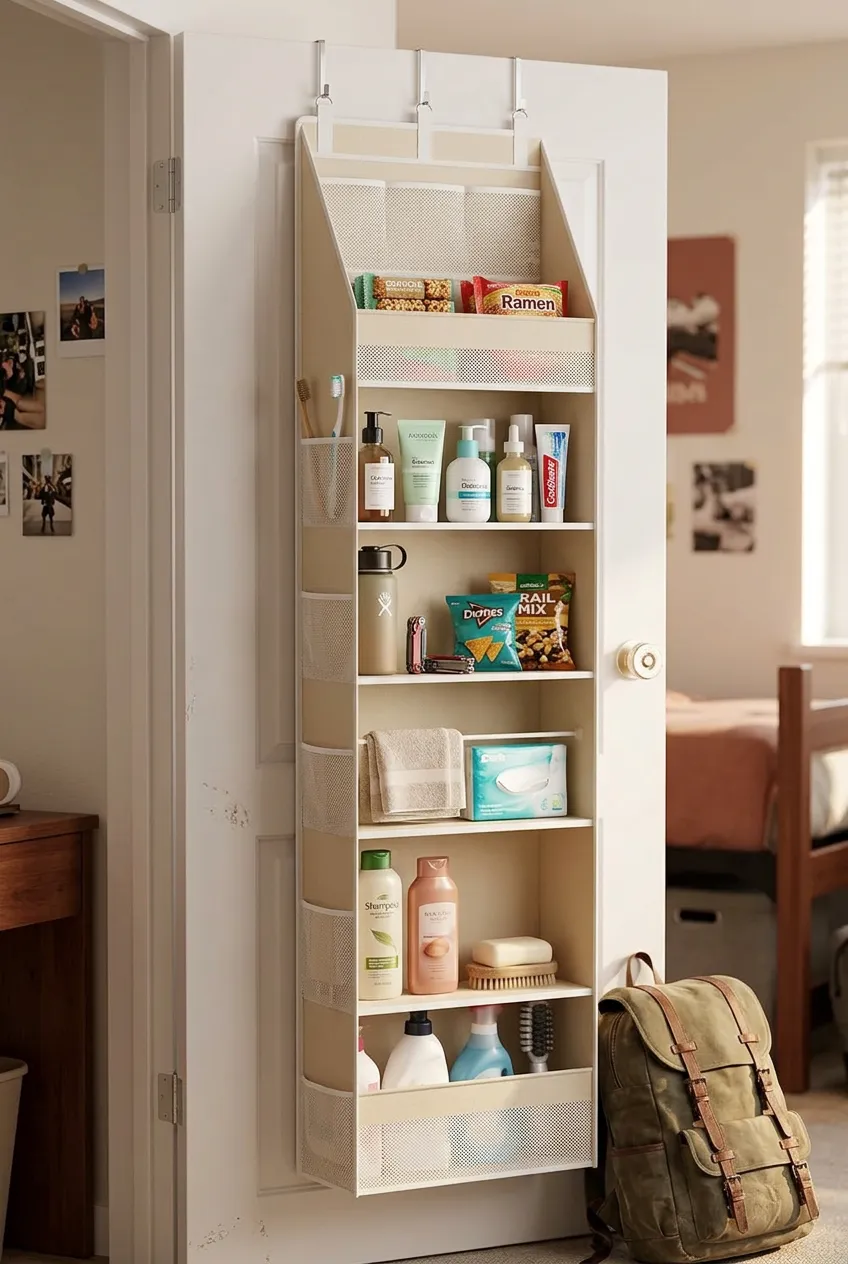
The back of the door. It's flat, it's vertical, and nobody uses it. An over-the-door organizer with shelves and mesh pockets turns it into the catch-all spot for everything that doesn't belong on your desk: snacks, toiletries, chargers, keys, headphones.
- Shelf-style organizer for heavier items (textbooks, first-aid kit, snack stash). Look for one rated to 50+ pounds so it doesn't sag by midterms
- Simple hook rack on the closet door for towels, bags, jackets, and the bathrobe that has nowhere else to live
Use both doors if you have them. Room door gets the shelf organizer (you see it, so you use it). Closet door gets hooks (grab-and-go items). Two doors, two systems, zero floor space claimed.
One warning: check that the door closes fully with the organizer on it. Most do, but thick metal hooks on a tight frame can block the latch. Test before you load it up.
Where do you put your phone and water when there's no nightstand?
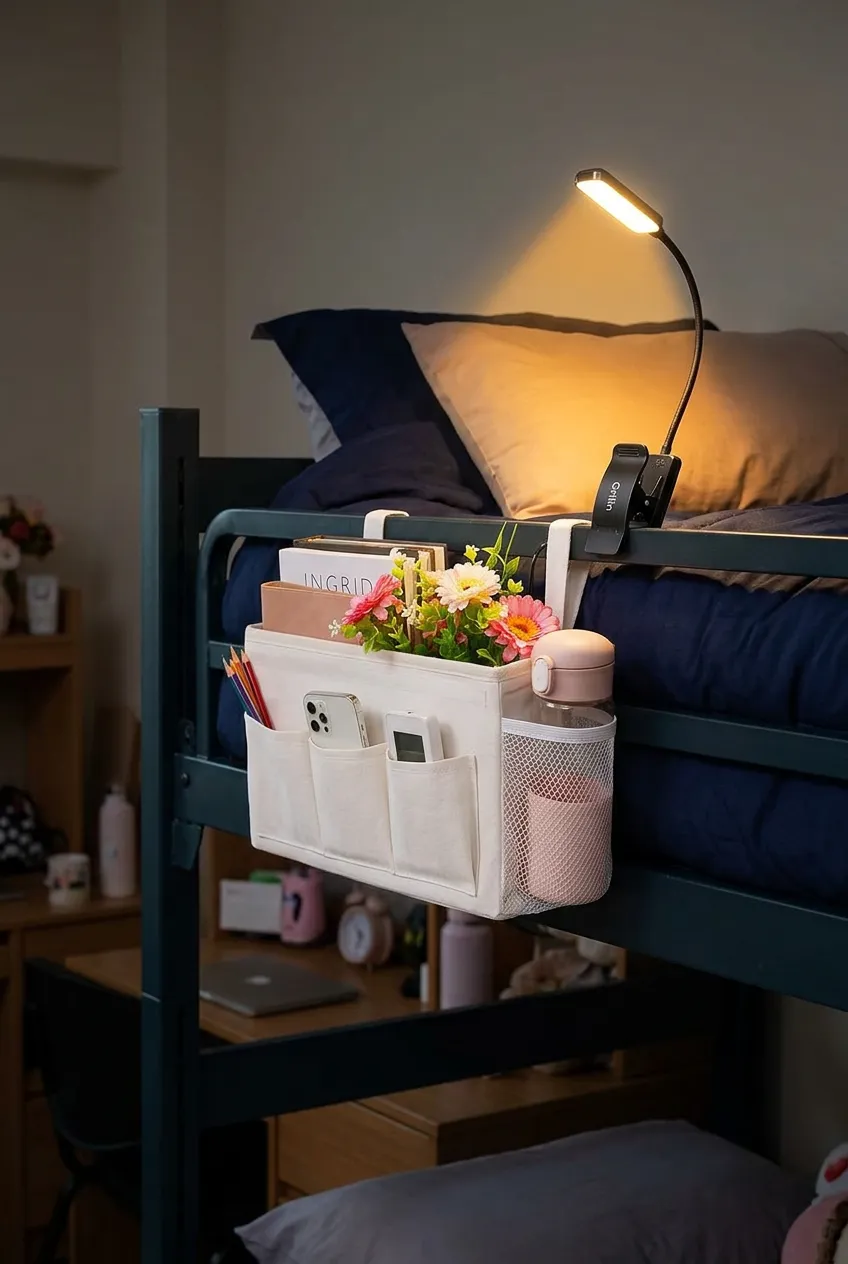
A bedside caddy straps to the rail and holds everything you reach for in the dark. Phone, charger, water bottle, glasses, earbuds. It's a nightstand without the floor space.
- Fixed straps (not slip-on pockets) so it doesn't slide down the rail overnight
- Water bottle pocket on the outside, deep enough that a Nalgene won't tip
- Flat pocket for a tablet or a book you're reading
The charging problem. Run your phone charger through the caddy's cable slot and plug it into the power strip behind the bed. Phone charges overnight, cord stays tucked, and you're not leaning off the top bunk at midnight trying to find the outlet.
Skip bedside shelves that mount with adhesive. They hold up for a week, then peel off at 3 am and take your water bottle with them.
Unpack the bins first. Seriously. The under-bed storage is the one thing that buys you floor space on move-in day, and floor space is what makes a shared dorm room feel livable. The rest slots in over the first week.
Four zones, six products. The room came with the space. You just need to claim it.
Storage is one piece of the move-in list. The full dorm room essentials checklist covers the other three zones, and the study corner gets its own desk organization ideas.