
Dorm Decor
Dorm Room Essentials: The 8 Things That Actually Matter for Move-In
This post contains affiliate links. As an Amazon Associate we earn from qualifying purchases, at no extra cost to you.
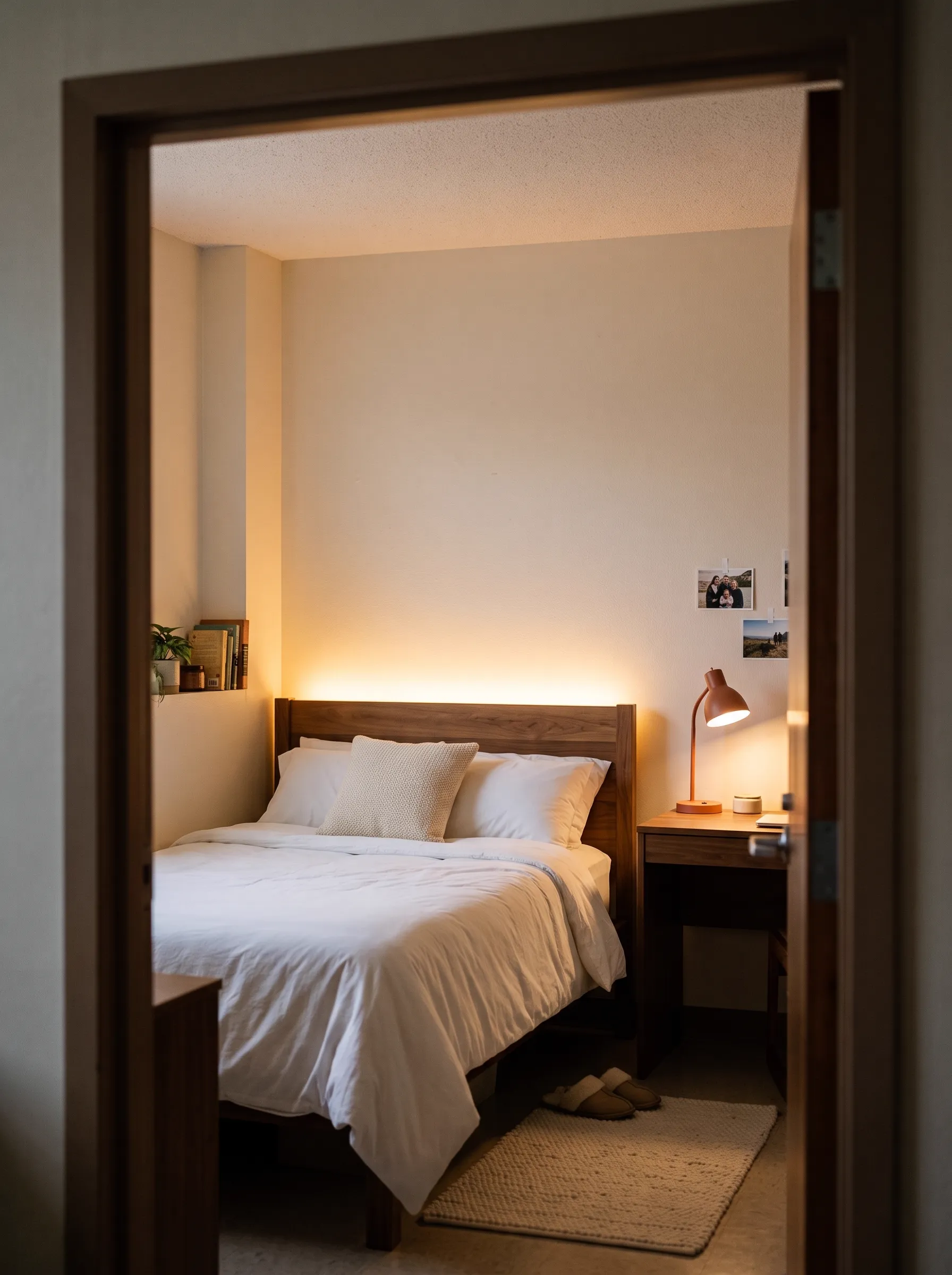
Dorm room essentials lists love to hit you with 50 items, and half of them you'll never unbox. The truth is simpler. Your comfort in that tiny room comes down to about eight things, and getting those eight right matters more than filling a cart at the campus bookstore.
What do you actually need for a dorm room? Get these four zones right and the other 42 items on most dorm room checklists stop mattering.
- Bedding that makes the standard-issue mattress survivable
- A desk setup that lets you work after dark without tripping over cables
- Storage that fits a room with one shallow closet
- One lighting upgrade that turns a concrete box into somewhere you want to be
Below is exactly what to get, organized by zone, with a reason for every pick.
What bedding do you actually need for a dorm room?
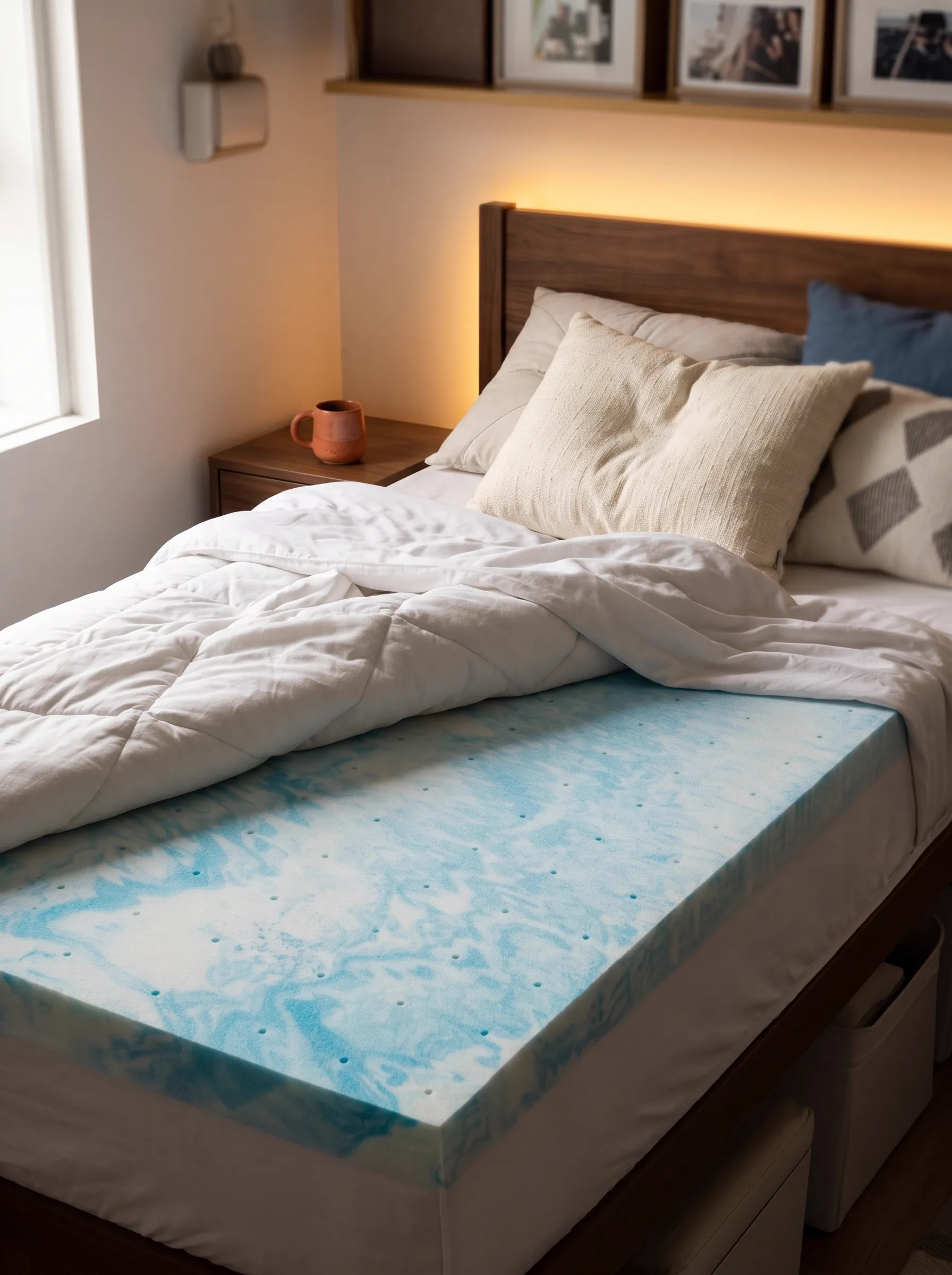
Three layers, and that covers it. You have a Twin XL mattress the width of a yoga mat. Dress it well; don't bury it.
- Memory foam topper, fixes the vinyl slab underneath
- One Twin XL sheet set. Microfiber, not cotton
- A machine-washable comforter, the shared laundry is your only option
Skip the decorative pillows and the second duvet.
Start with the topper. Every dorm bed ships with the same vinyl-wrapped foam slab, and it sleeps exactly like it looks. A three-inch gel topper fixes that almost entirely.
Get one with a removable, washable cover. You will not want to wrestle a whole topper into a machine at 11 pm. Gel foam also sleeps cooler, which matters when your roommate keeps the thermostat at 78.
Sheets: Twin XL, not Twin. Five inches longer, and every dorm mattress uses this size. Go microfiber, which dries fast in communal laundry and survives being washed with everyone else's jeans.
Comforter: machine-washable, no exceptions. A down-alternative one handles thermostat wars and the inevitable spill without a dry cleaner that doesn't exist near campus. Pick a neutral so it works with whatever else lands in the room.
Picture the first cold night after move-in: overhead light off, and the bed actually feels good.
How do you set up a study space in a tiny dorm room?
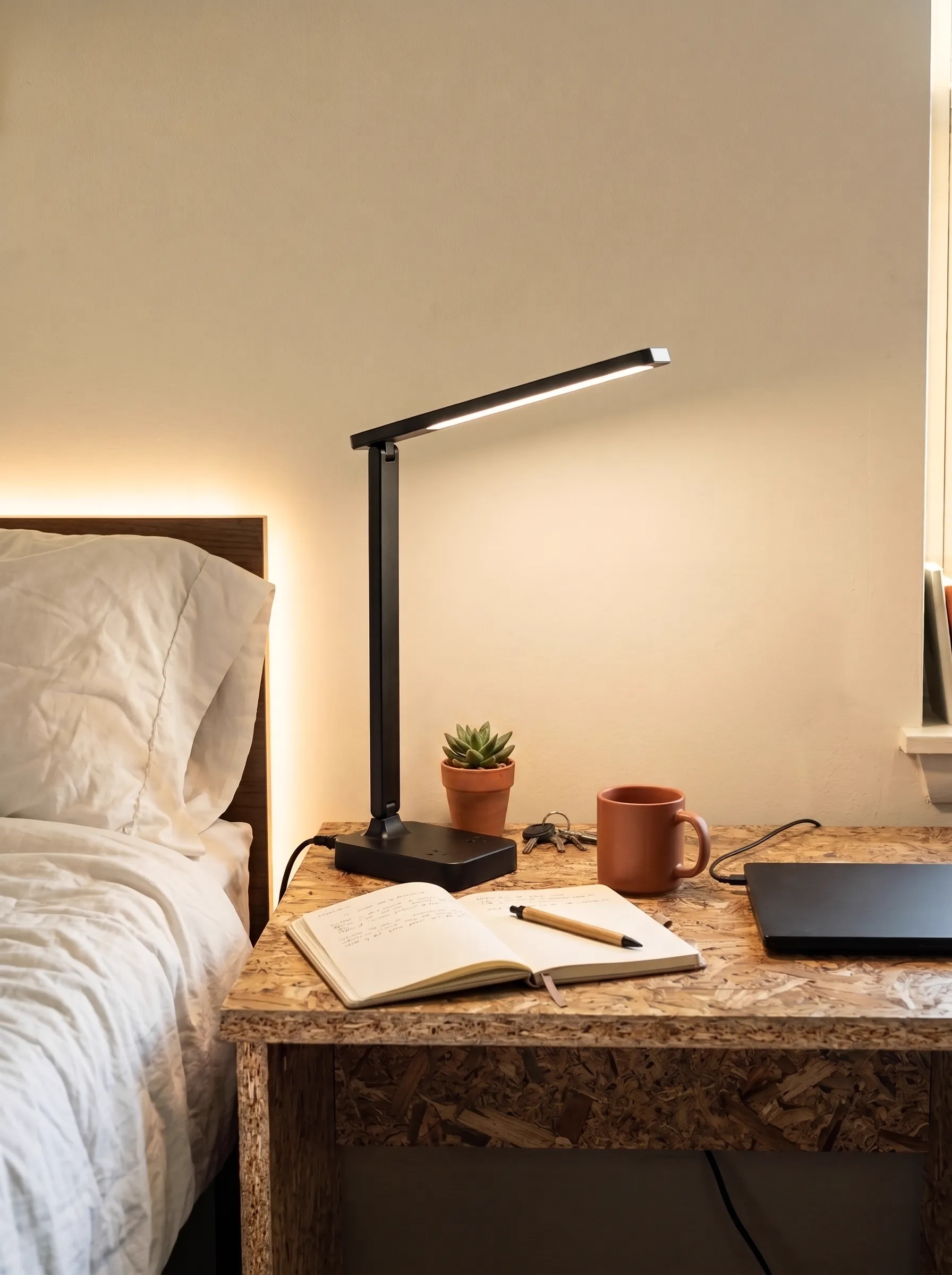
Two things fix a dorm desk: a lamp that charges your phone while it lights your textbook, and a power strip long enough to actually reach the outlet.
The lamp solves half of it. Dorm desks come with zero built-in lighting and one outlet that's somehow always behind the bed.
- USB port and AC outlet in the base, your phone charges on the desk, not across the room
- 3000K to 4000K. Warm enough not to feel like an interrogation, cool enough that your eyes last an hour
The power strip fixes the other half. A standard plug sticks out three inches, so your bed or desk can never push flush to the wall. A flat plug disappears.
Get at least six feet of cord, ten if you can, so you can route it behind furniture instead of across the floor. Between a laptop, phone, lamp, speaker, and whatever your roommate borrows, you'll use every outlet before October.
One habit beats any product here: keep the desk clear by default. If it isn't the lamp, the laptop, or the thing you're working on now, it lives somewhere else. A clear desk makes a small room feel twice its size.
How do you organize a dorm room with almost no closet?
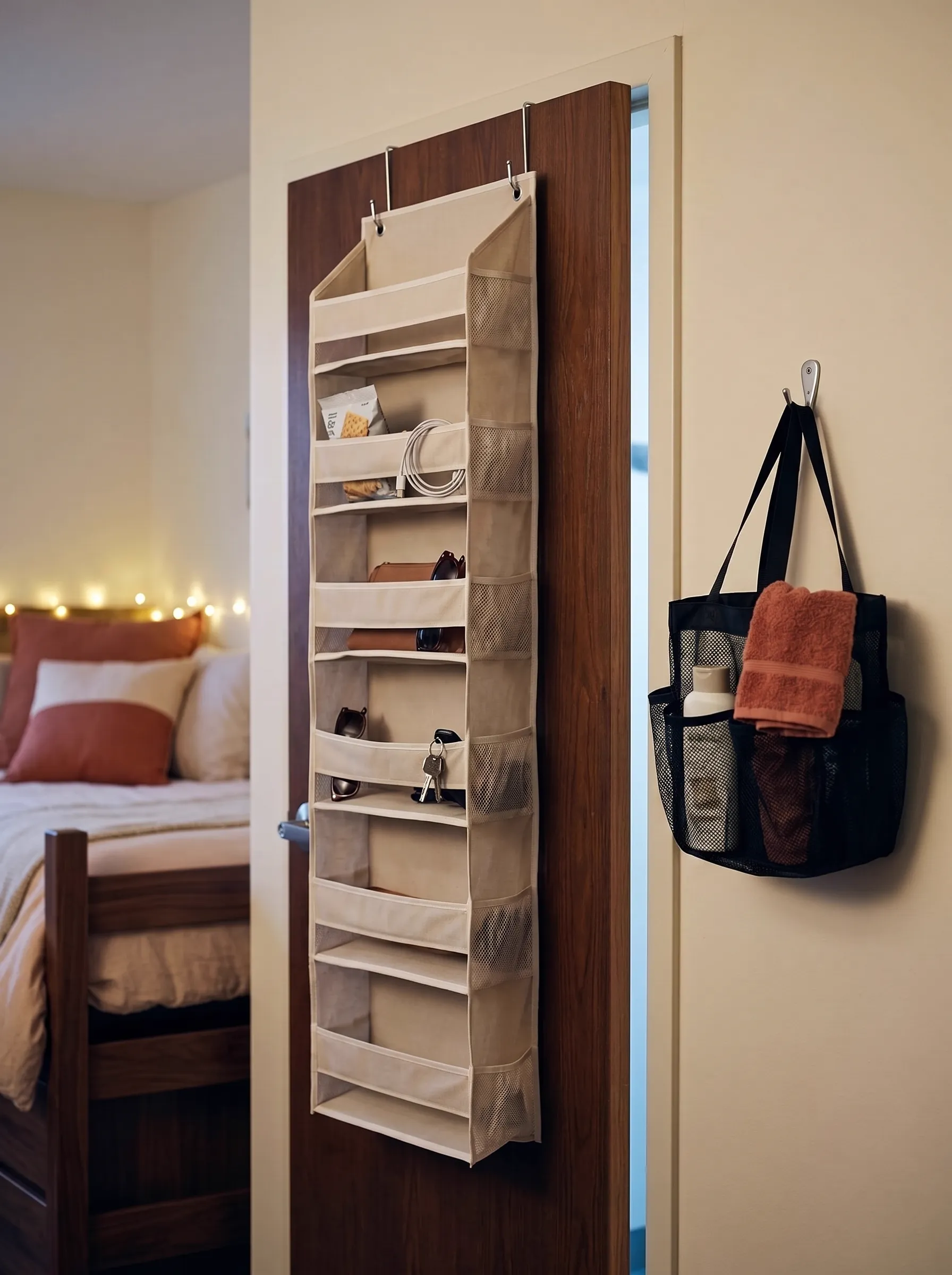
Use the door and plan for the shower trip. Those are the two storage zones most freshmen overlook, and they solve the two biggest friction points of dorm life: "where does all this stuff go?" and "how do I carry shampoo down the hall without dropping everything?"
The door is free storage. An over-the-door organizer turns a flat slab of nothing into twelve pockets: snacks, chargers, headphones, keys, the stuff that otherwise colonizes your desk.
No holes, no hardware, and it moves to the next dorm with you. Look for one rated to at least 30 pounds: cheap ones sag by midterms and dump everything at 2 am.
Mesh caddy, not plastic. Plastic collects water in the bottom and gets slimy within a week. Mesh drains itself, dries in an hour, and hangs from the shower hook while you're in there.
Get one with handles and a side hook so you can carry it one-handed while juggling a towel and your phone.
For everything else, think vertical. The room already gives you this space for free:
- Hanging closet shelves, two feet of rod becomes five shelves
- Under-bed storage bags, off-season clothes and spare bedding
What makes a dorm room actually feel like home?
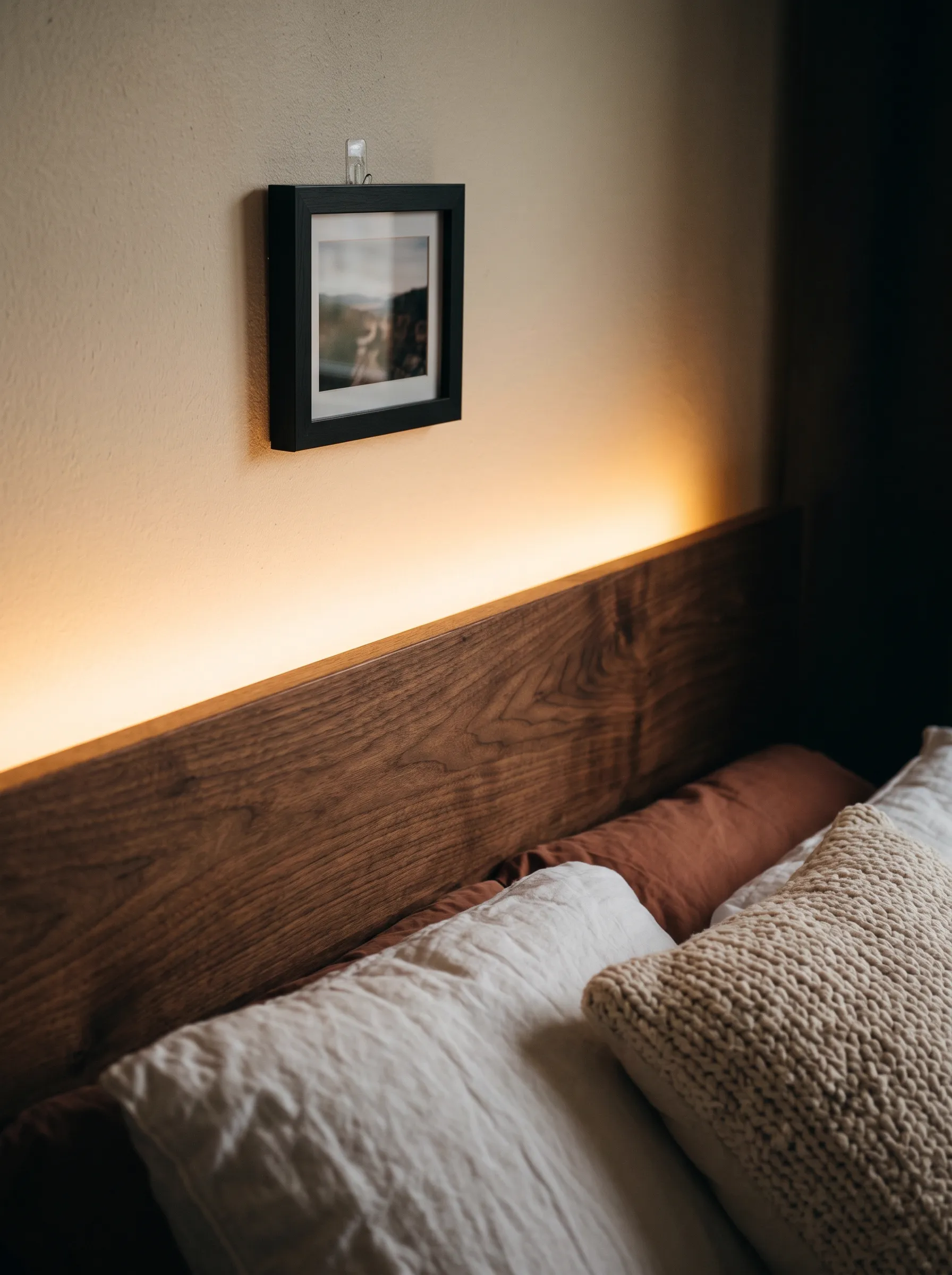
One thing: warm light that is not the overhead fluorescent. That ceiling tube makes every dorm room look like a hospital at 10 pm, and turning it off is the single biggest upgrade for how the space feels.
Use a COB strip, not a regular one. COB means chip-on-board: no visible dots, just a smooth even glow, more late-afternoon sun than gaming setup.
Stick it behind the headboard with the 3M backing, plug it in, and set it to 2700K warm white. That's the lamplight zone that reads lived-in instead of clinical.
Skip the hanging string lights. They gather dust in a week and read dated. Hidden light bouncing off the wall is the look that holds up, in person and in photos.
The rest is free:
- Your own pillowcase from home
- A photo or two on the desk (command strips, never tape)
- Surfaces kept clear so the room breathes
A dorm room that feels like home isn't one that's full. It's one where every piece is there on purpose.
Our picks
Similar finds on Amazon
The topper is the one that matters most. You can study at a mediocre desk and sort out a messy closet in October. You can't catch up on two months of bad sleep.
Leave the 50-item checklist at the store. Eight is enough.
Going deeper on any one zone: dorm bedding for the Twin XL layer order, dorm room organization for the closet, and desk organization ideas for the study corner. If the bed is lofted, start here instead.