Reading Nooks
Reading Nook Ideas for a Small Corner: What to Buy First
This post contains affiliate links. As an Amazon Associate we earn from qualifying purchases, at no extra cost to you.
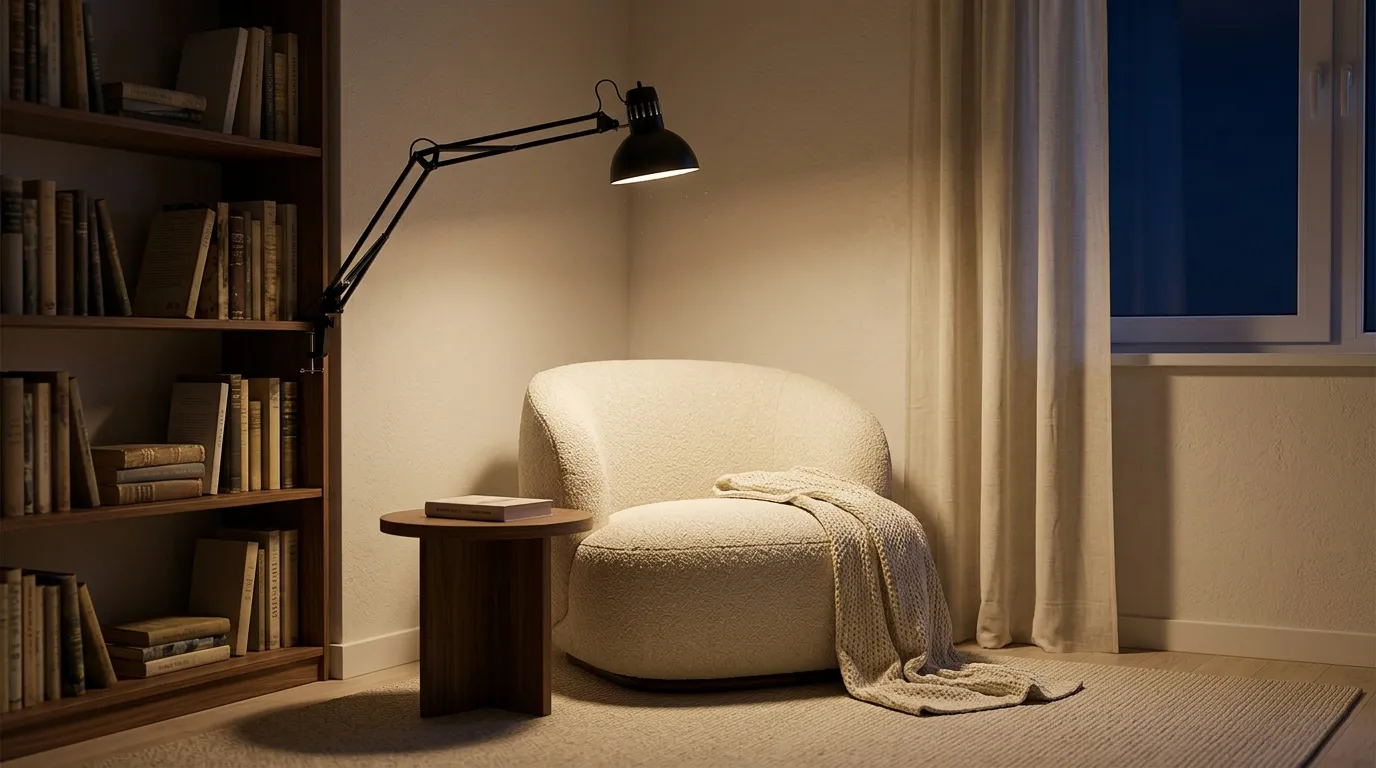
Reading nook ideas get listed everywhere, usually as sixteen lovely things in no particular order. That's not much help when you have one corner, a chair you didn't choose, and a lease that says no holes in the walls.
How do you make a cozy reading nook? Buy the light first. One small lamp you can aim at the page changes a corner more than anything else you can spend on. Back support comes second, something under your feet third, and the small things that keep your mug warm and your books off the floor last. You do not need to buy a chair to start.
The order matters more than the list. Get it wrong and you end up with a reading corner that photographs well and never gets used. Get it right and you'll be sitting in it by the second evening.
What does a cozy reading nook need first?
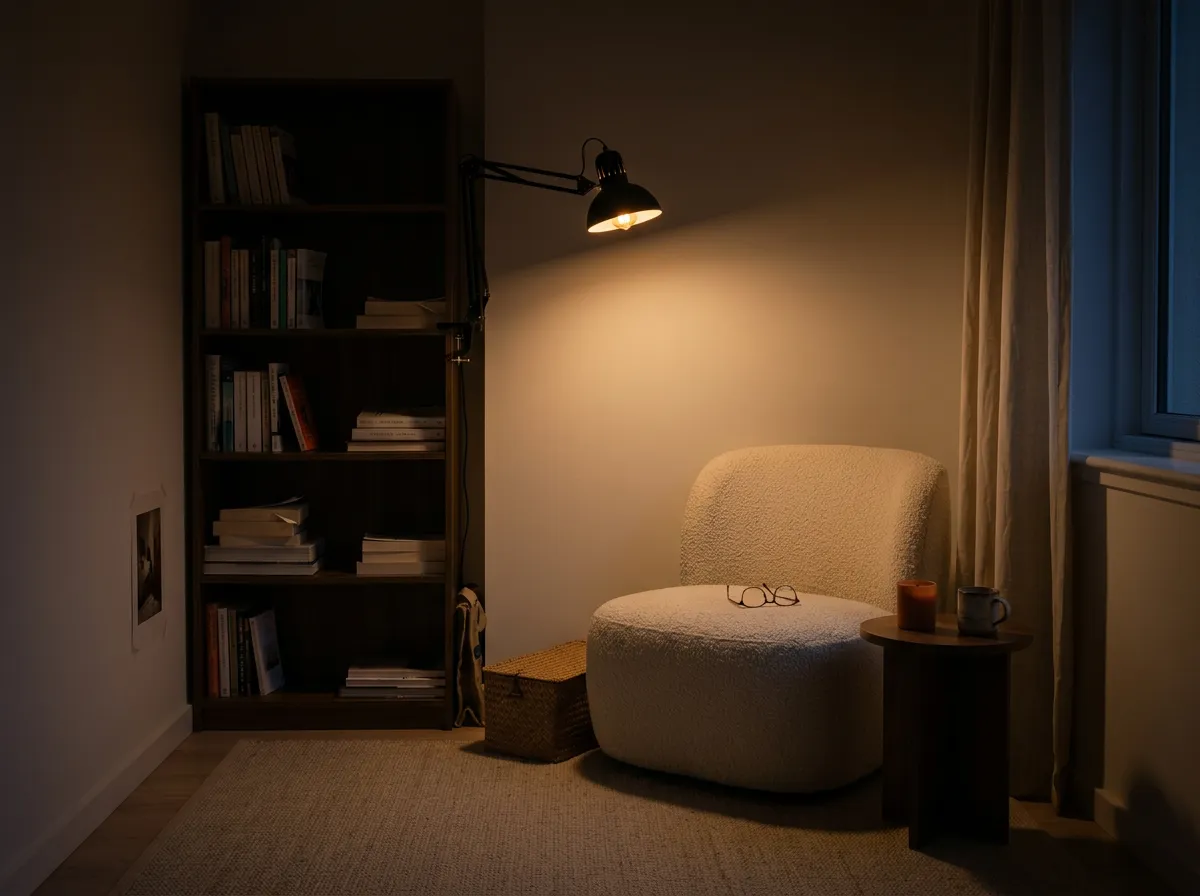
Light aimed at the page, not at the ceiling. Overhead bulbs light the whole room and none of your book. A nook needs one small directional source you can point at whatever you're reading, and every other decision in the corner gets easier once that's sorted.
Clamp lamps are the renter's answer. The clamp bites onto a shelf edge, a desk, or the side of a bookcase, so you get proper task light without giving up any floor space.
- Warm bulb, not bright bulb. 2700K reads like evening. Anything cooler turns the corner into a study carrel no matter how nice the shade is
- Aim it from behind your shoulder. Light arriving over your shoulder lands on the page without glare. Light in front of you just bounces back into your eyes
- Dimmable matters more than brightness. You want to take it down to almost nothing when your eyes get tired, without getting up
Can you skip the lamp entirely? Sometimes. If there's already a lamp within reach of the chair, a warm dimmable bulb does most of this job for very little. Try that before you buy anything with a cord.
Does a cozy reading nook need its own chair?
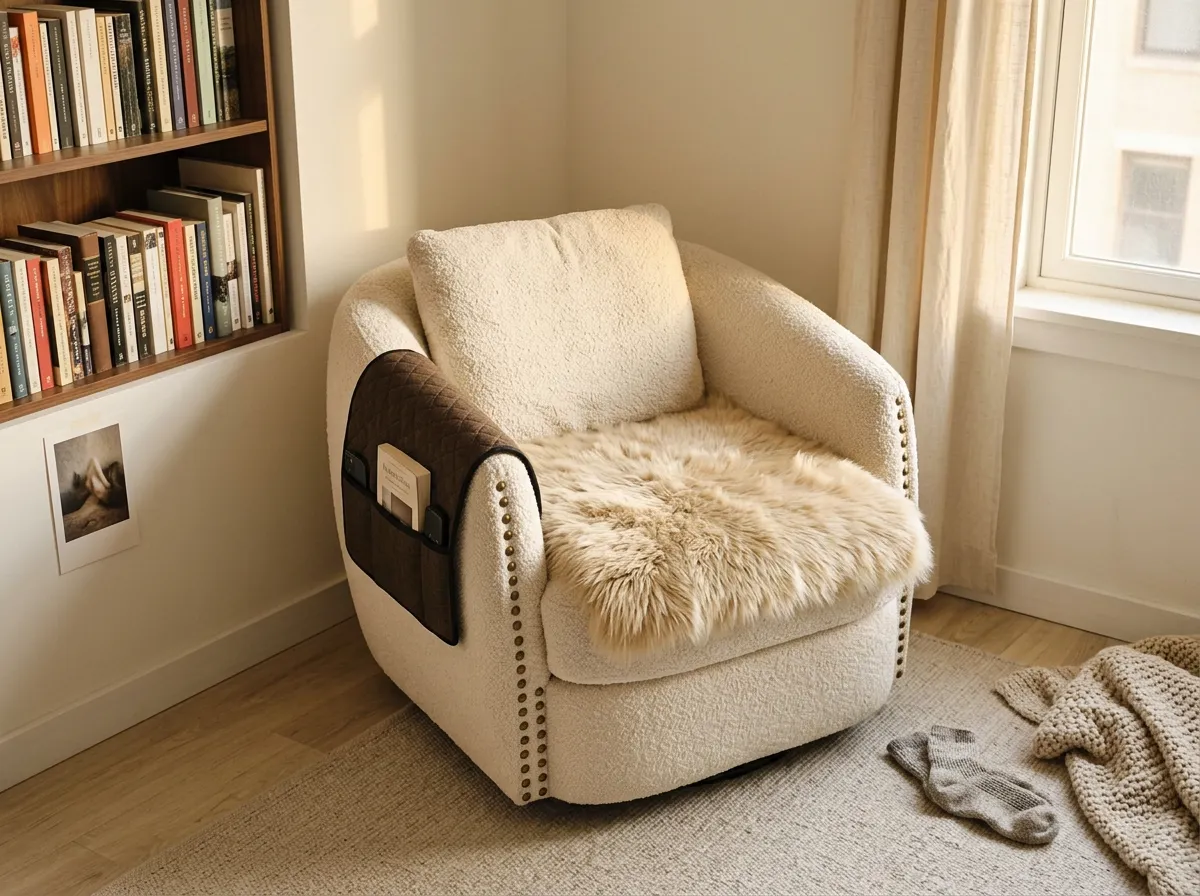
No, and starting with the chair is the most common way this goes wrong. The chair is the expensive part. Spend the budget there and there's nothing left for light. A dining chair, a desk chair, or the end of the sofa works once you soften it.
Two cheap things do the softening. A seat pad changes how a chair feels and how it looks, and an arm caddy gives your book somewhere to live that isn't the floor.
- A sheepskin pad hides a chair you didn't choose. Wrong wood tone, worn upholstery, office-chair energy: the pad covers the part you see and the part you sit on
- Tie it down if the seat is slippery. Most pads have ties or a grippy backing. On a smooth wooden seat you want one or the other, or it slides all evening
- An arm caddy beats a side table in a tight corner. It drapes over the arm, holds the book and your glasses, and takes up no floor at all
What if your chair has no arms? Then the caddy goes over the back instead, or you skip it and let a lidded basket beside the chair do the same job. Armless chairs need the footrest more than they need the caddy.
What makes a reading nook comfortable enough to sit in for an hour?
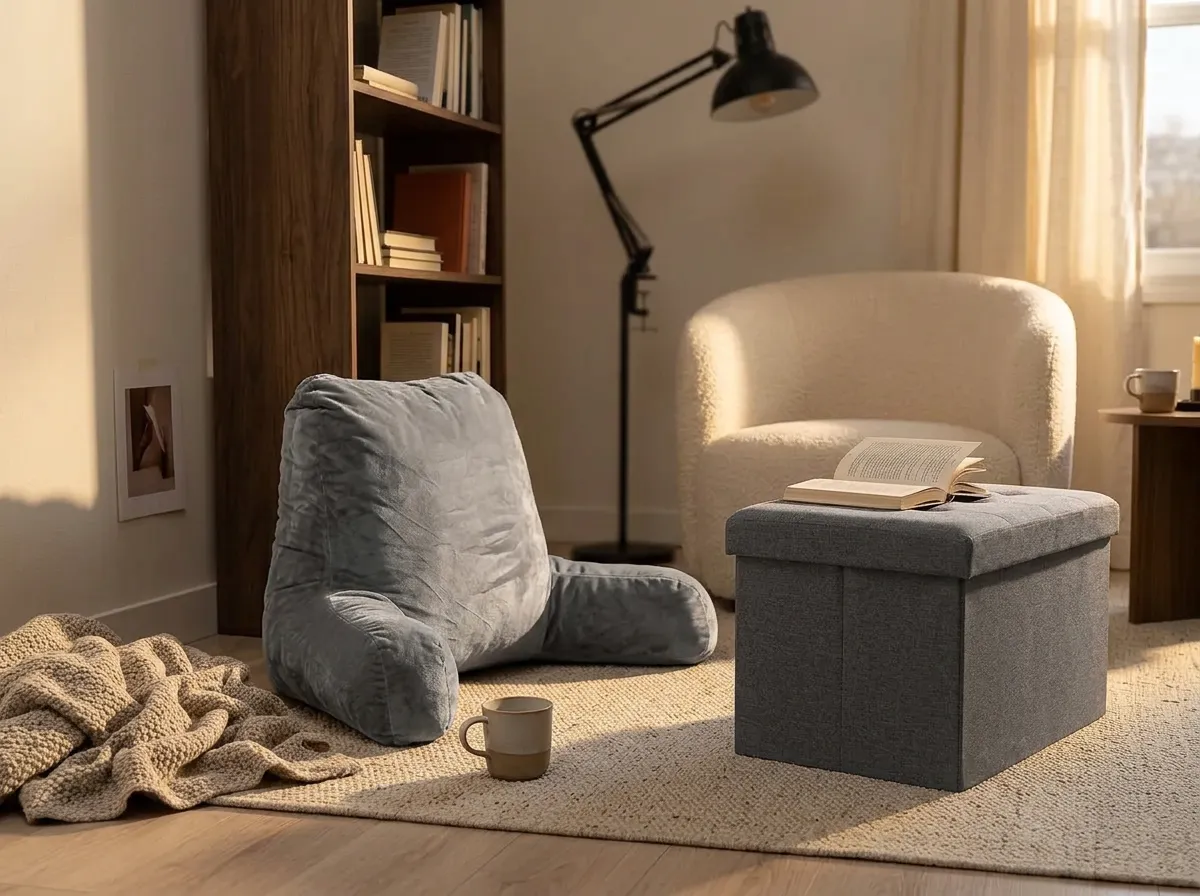
Support behind your lower back, and something under your feet. Twenty minutes is easy in almost any chair. The hour is where it falls apart, and it falls apart in the same two places every time.
A backrest pillow with arms is the piece most nook lists leave out. It turns a flat surface into a chair shape, which is why it works on a bed, a window seat, or a sofa corner just as well as in a chair.
- Check the height against your shoulder blades. The arms should sit under your elbows, not up around your ears
- Feet flat and slightly raised takes the pull off your lower back. That's why a footstool beats adding a second cushion
- Get one that opens. A folding storage ottoman swallows the blanket you're not using, so the corner keeps one less pile in it
Does the ottoman double as a seat? It does, and that's the quiet reason to get one. When someone else wants to sit in your corner, you don't have to give up the chair to be polite.
Where do the mug and the books actually go?
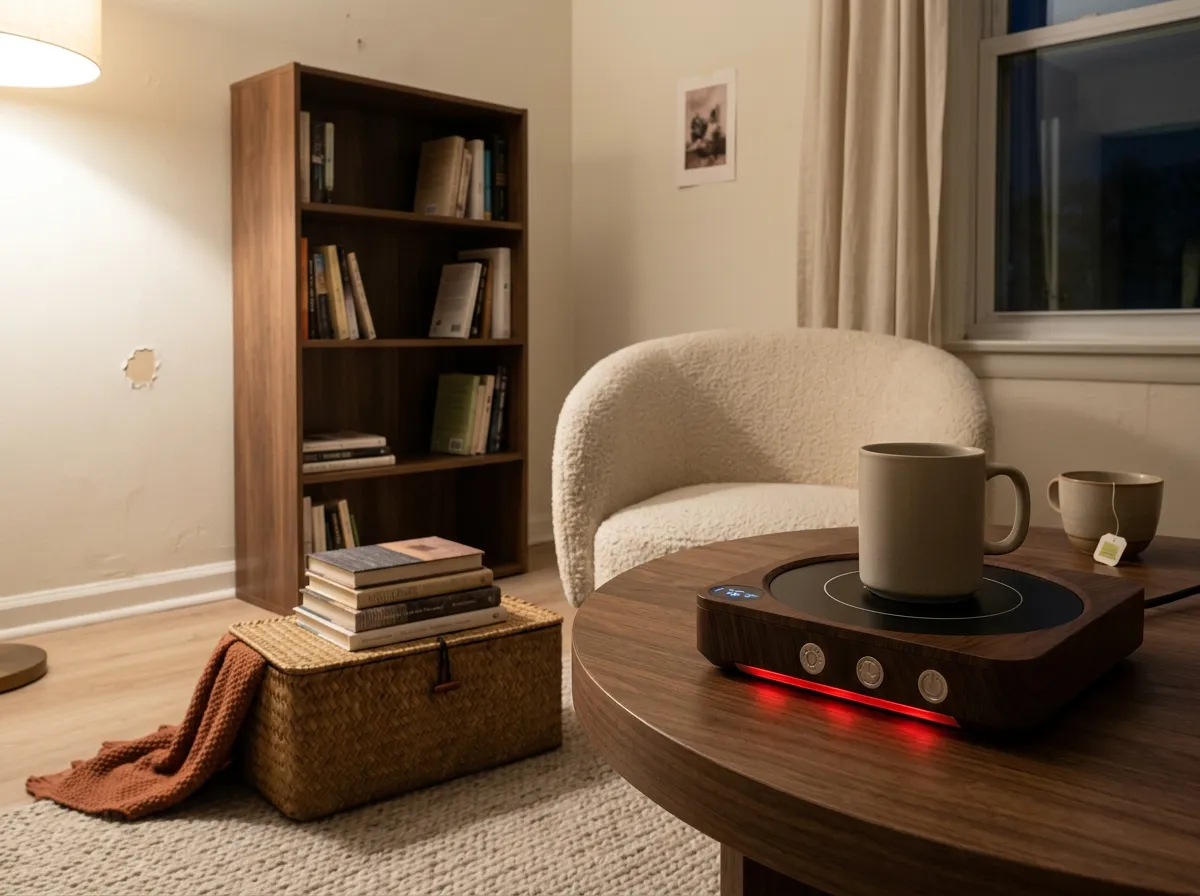
On a warm plate, and in a basket with a lid. The floor is where a reading corner goes to die. Two small things stop that: somewhere the mug stays hot, and somewhere the books go that still looks deliberate.
A mug warmer sounds like a gadget right up until you've reheated the same tea three times in one evening. It's a coaster that holds temperature, with a shutoff so you can forget it's on.
- Rectangular baskets beat round ones next to a chair. Flat sides sit flush against the chair or the wall instead of eating the walkway
- A lid gives you a surface. The mug goes on top and the pile underneath stops spreading sideways
- Keep it to one basket. Two baskets is a shelf you didn't mean to build
Doesn't a mug warmer need an outlet? It does, and it's the one thing here that ties you to a wall. If the corner has no outlet within reach, put an insulated mug with a lid on the list instead and move on.
What should you skip when you set up a reading nook?
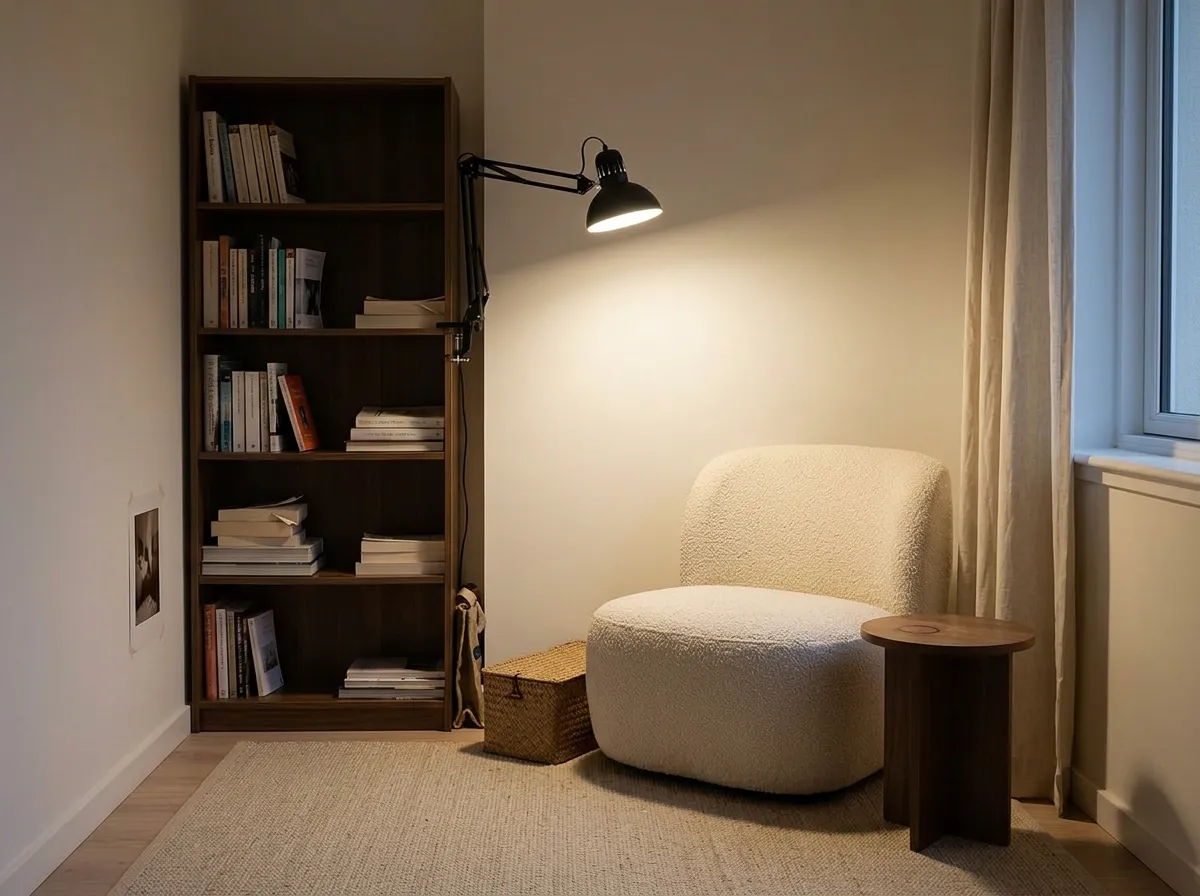
Most of what you see in reading nook photos is there for the photo. Four things in particular get styled into the picture and then get in your way the moment you sit down to read in that corner.
- Skip string lights. They're ambient, and ambient is the one kind of light you don't need more of here. One lamp you can aim does the job they can't
- Skip the 2x3 rug. A rug that small makes the corner look smaller. Go big enough to sit under the whole chair, or leave the floor alone
- Skip the matching side table. In a real corner it blocks the walkway. A caddy over the arm or a lidded basket holds the same things and disappears
- Skip the stack of books you're not reading. Decorative stacks are just objects. The pile you're genuinely working through looks better and costs nothing
What's left is a short list. One warm light you can aim, something behind your back, something under your feet, one container. The rest is decoration you can add later or never.
So where does the money go? The light. It's the only thing on this list that decides whether the corner works after dark, which is when most reading happens anyway.
Start with the light. If a lamp already stands within reach of the chair, the warm bulb on its own gets you most of the way, and the money you didn't spend goes on the backrest.
Nine at night, one lamp on, feet up on something. That's the test. Everything else on this page is optional.
If the nook lives in a bedroom, the same warm-and-layered thinking runs through our cozy bedding ideas and the rest of the cozy home essentials.