
Cozy Bedrooms
Bedroom Lighting Ideas: 5 Cozy Layers That Replace the Overhead Light
This post contains affiliate links. As an Amazon Associate we earn from qualifying purchases, at no extra cost to you.
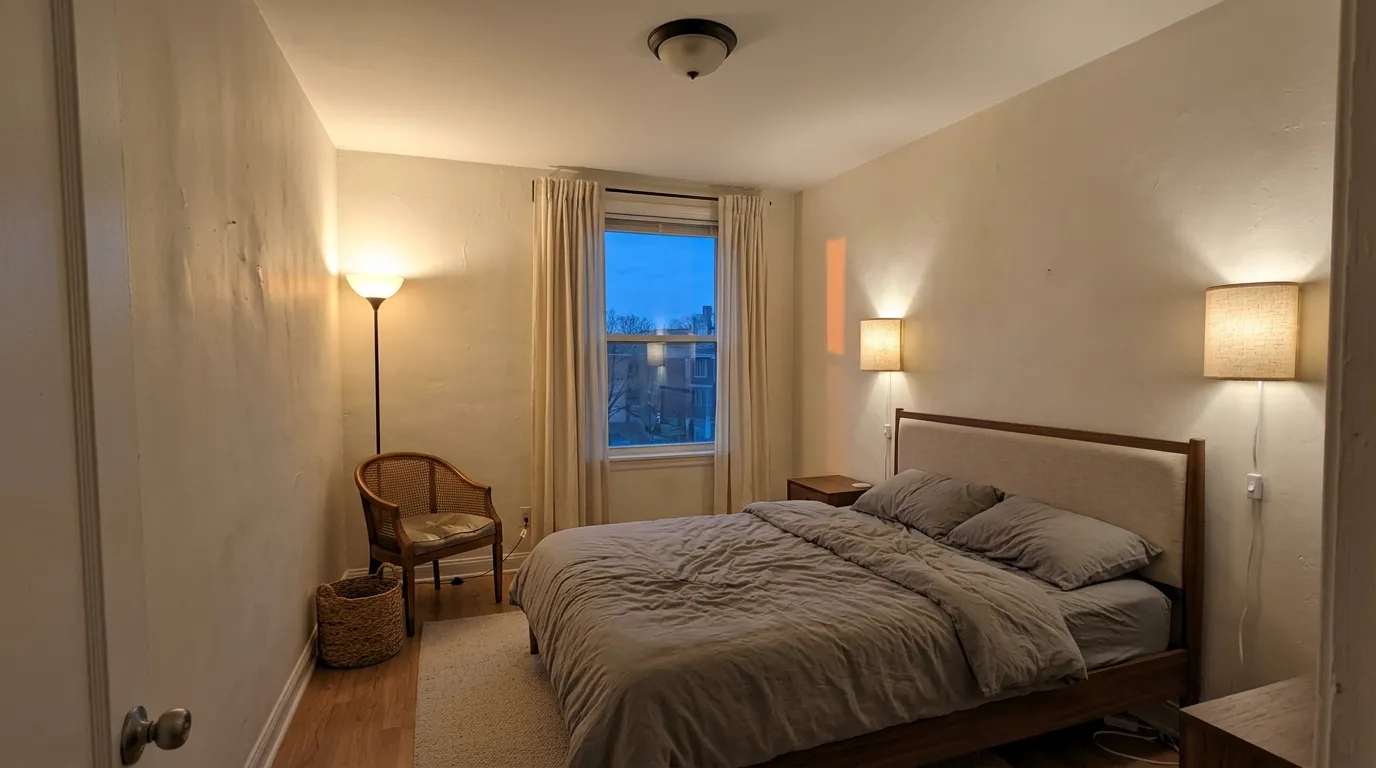
Most bedroom lighting ideas start with what to add. Cozy bedroom lighting is really a subtraction problem. The one ceiling fixture in a rental is doing all the work. It sits dead center, and it points straight down at you. No amount of soft bedding fixes a room lit like a hallway.
How do you make bedroom lighting feel cozy? Stop lighting the room from one point above your head, and start lighting it from three or four points below it. Warm bulbs, low placement, more than one source. That is the whole difference between a bedroom and a waiting room.
So here are five layers, in the order that gives you the most change for the least effort. None of them need a drill, a new fixture, or a conversation with your landlord. Most of them plug in or run on a battery.
What color light makes a bedroom feel cozy?
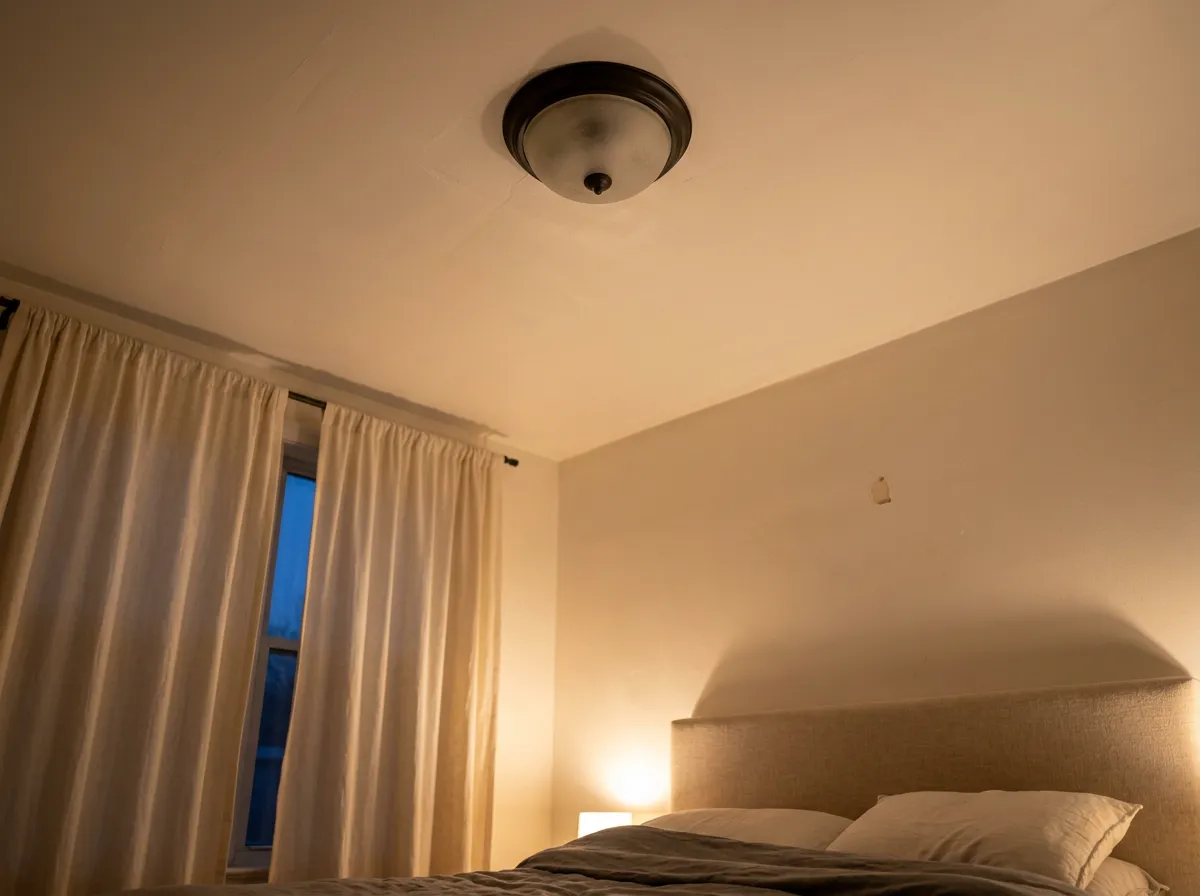
Warm and dimmable, around 2700K. That number is printed on every bulb box. Lower means yellower. 2700K reads like lamplight at dusk, 4000K reads like a bathroom, and 5000K is the daylight bulb that makes your room feel like a place you go to get a filling.
- 2700K or lower for anything you'll use after dark. This is the whole game
- Dimmable as well as warm. A warm bulb at full blast is still a bright bulb
- Match every bulb in the room. One cool bulb among warm ones reads as broken, not layered
Start with the lamps you already own. Before buying a single new fixture, put warm dimmable bulbs in whatever you've got. Smart bulbs earn their spot here because the dimming lives in your phone, so a lamp with a plain click switch still gets a low setting.
What about the ceiling light itself? Put a warm bulb in that too, then use it for finding socks. It stays off in the evening. You're not fixing that fixture, you're retiring it.
What's the best bedside lamp for a cozy bedroom?
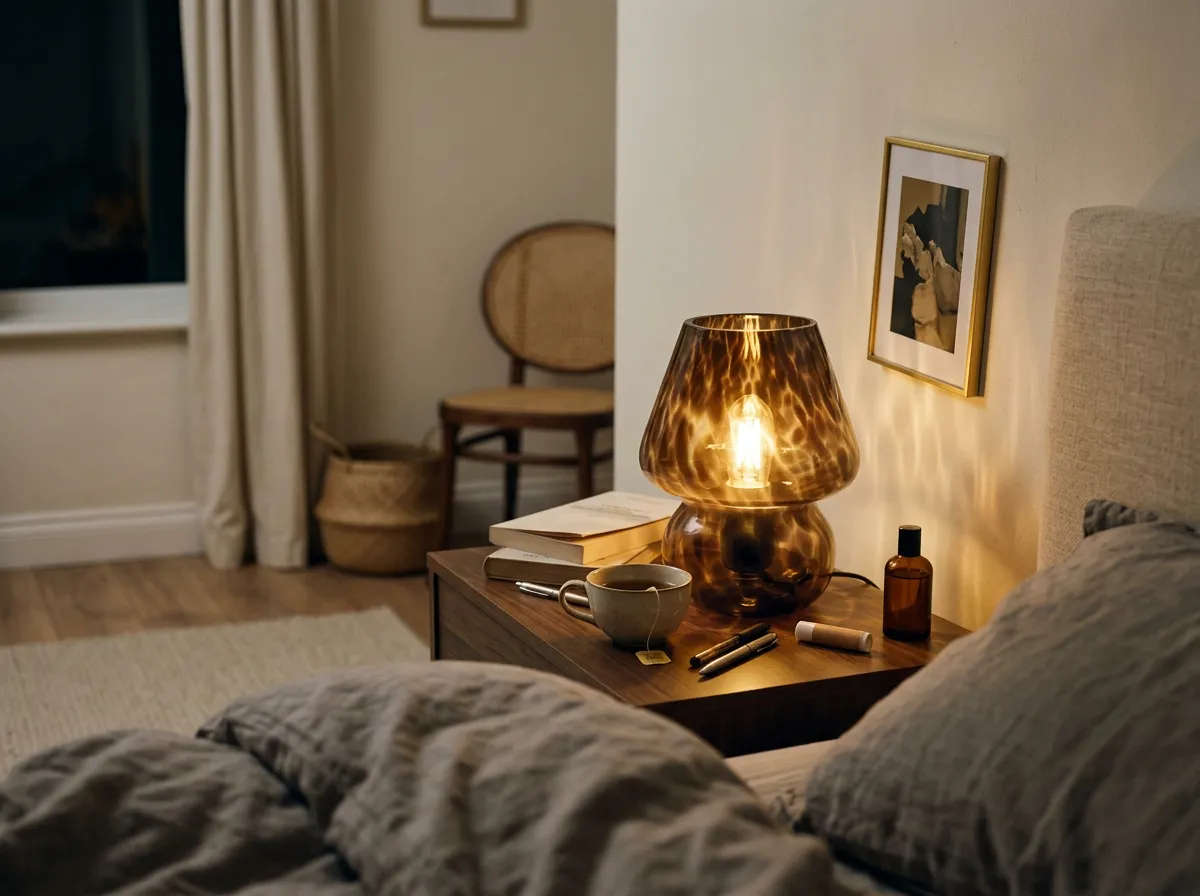
One that's worth looking at when it's off. A bedside lamp is lit for maybe three hours a day and sitting in your eyeline for the other twenty-one. That's why plain white plastic domes disappoint. They light the room fine and add nothing to it.
Colored glass is the cheapest way to get character. Amber or tortoiseshell glass tints the light before it ever reaches the room, so an ordinary bulb comes out looking like candlelight. A visible filament inside doubles the effect.
- Height matters more than brightness. The shade should sit near your shoulder when you're sitting up in bed, or it shines straight in your eyes
- Tinted or opaque shade, not clear. Clear glass means you see the bulb, and a bare bulb at eye level is the opposite of restful
- A switch you can find in the dark. Touch bases and inline cord switches both work. Groping behind a shade at 2am does not
Skip the color-changing ones if the room is small. RGB looks fun in a photo and reads like a gaming setup in a room you actually sleep in. If you want the option anyway, leave it on the warmest white it has.
How do you get that ambient glow without a light strip?
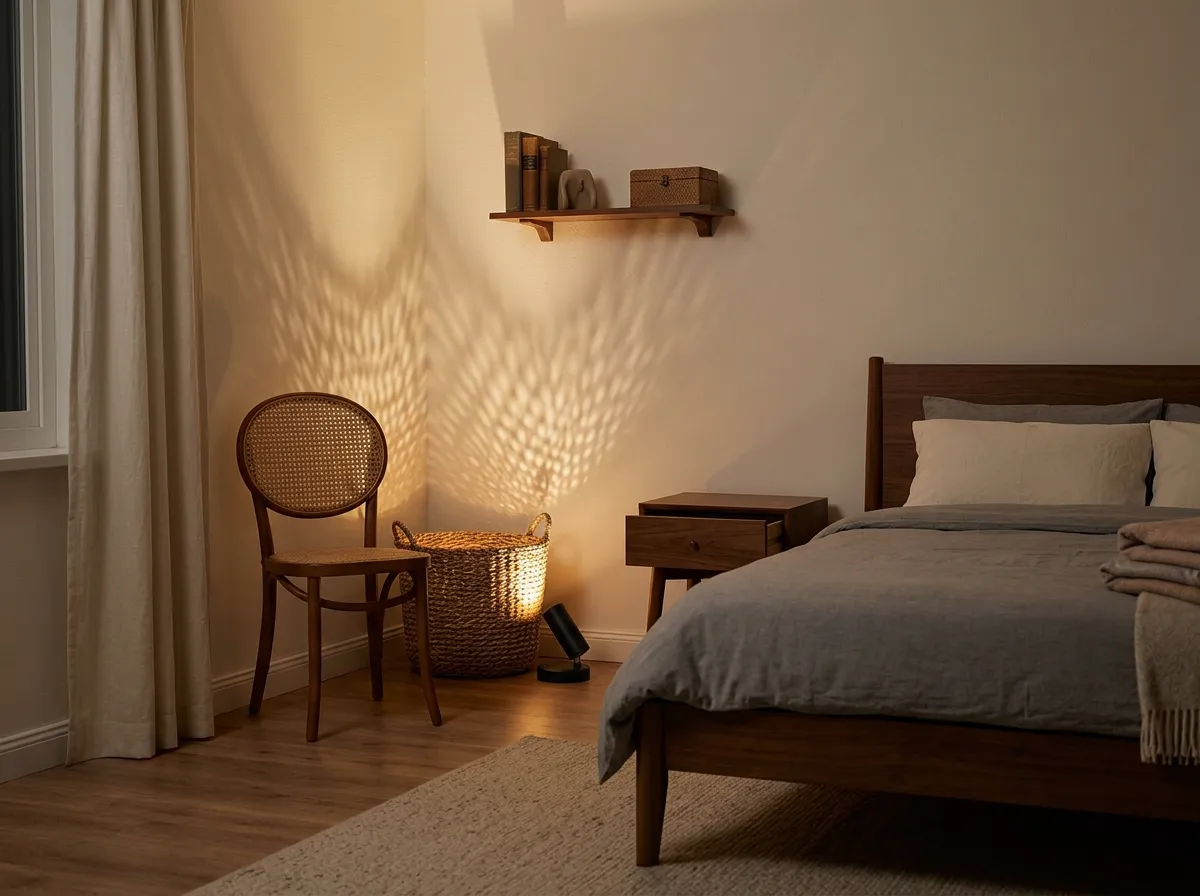
Hide one small light behind something with texture and let the wall do the work. Ambient glow is light you see the effect of without seeing the source. Adhesive strips are the usual answer. In a rental, a rechargeable puck light is the better one.
Nothing to peel off when you move. Stick-on strips leave a line of residue down your wall and they tend to die one segment at a time. A battery uplight just sits there, aims where you point it, and charges over USB.
- On the floor behind a woven basket, for a soft patterned wash up the wall
- Behind the headboard, aimed up, for the glow people usually chase with strips
- Behind a slatted chair or a stack of books in the corner that's always dim
Aim it at the wall, never into the room. The whole trick is bounced light. Point it at a person and it's a spotlight. Point it at a matte wall and it turns into atmosphere.
How do you add wall lighting if you can't drill?
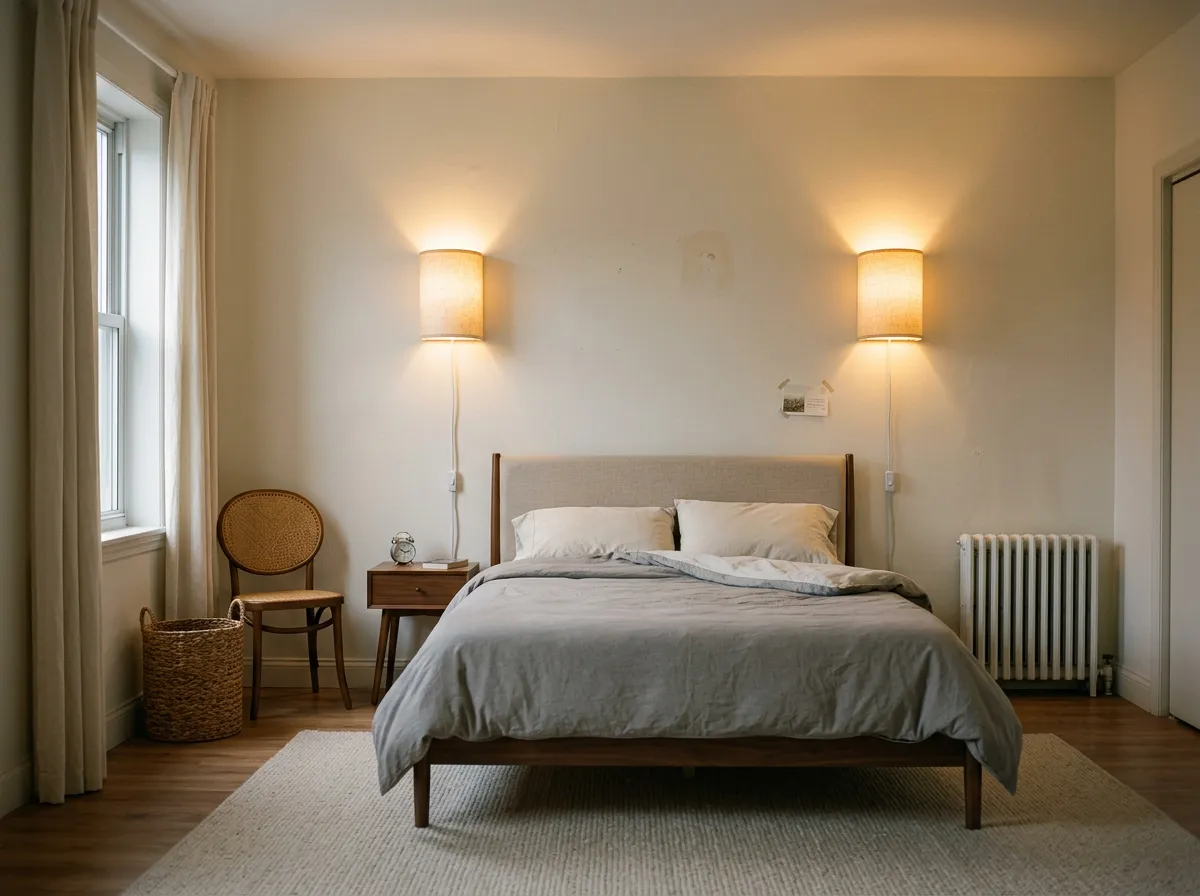
Use plug-in sconces, and let the cord show. Hardwired sconces are the renter's dead end. The plug-in version does the same job, hangs on adhesive hooks or two small nails, and reaches the nearest outlet on a cord.
The cord is not a flaw to hide. Once you stop apologizing for it, a cord running straight down the wall reads as a design choice. What looks bad is a cord that wanders sideways or loops off behind the nightstand.
- Hang the sconce a little above shoulder height, measured sitting up in bed
- Run the cord straight down rather than diagonally, and hold the line with a couple of adhesive clips
- Plug into the outlet the lamp already uses, with a low-profile splitter if it's full
Buy them in pairs, even if you sleep alone. Two, one on either side of the bed, is what makes the wall look finished. A single sconce floating on its own always reads like something is missing opposite it.
How do you light a dark corner in a small bedroom?
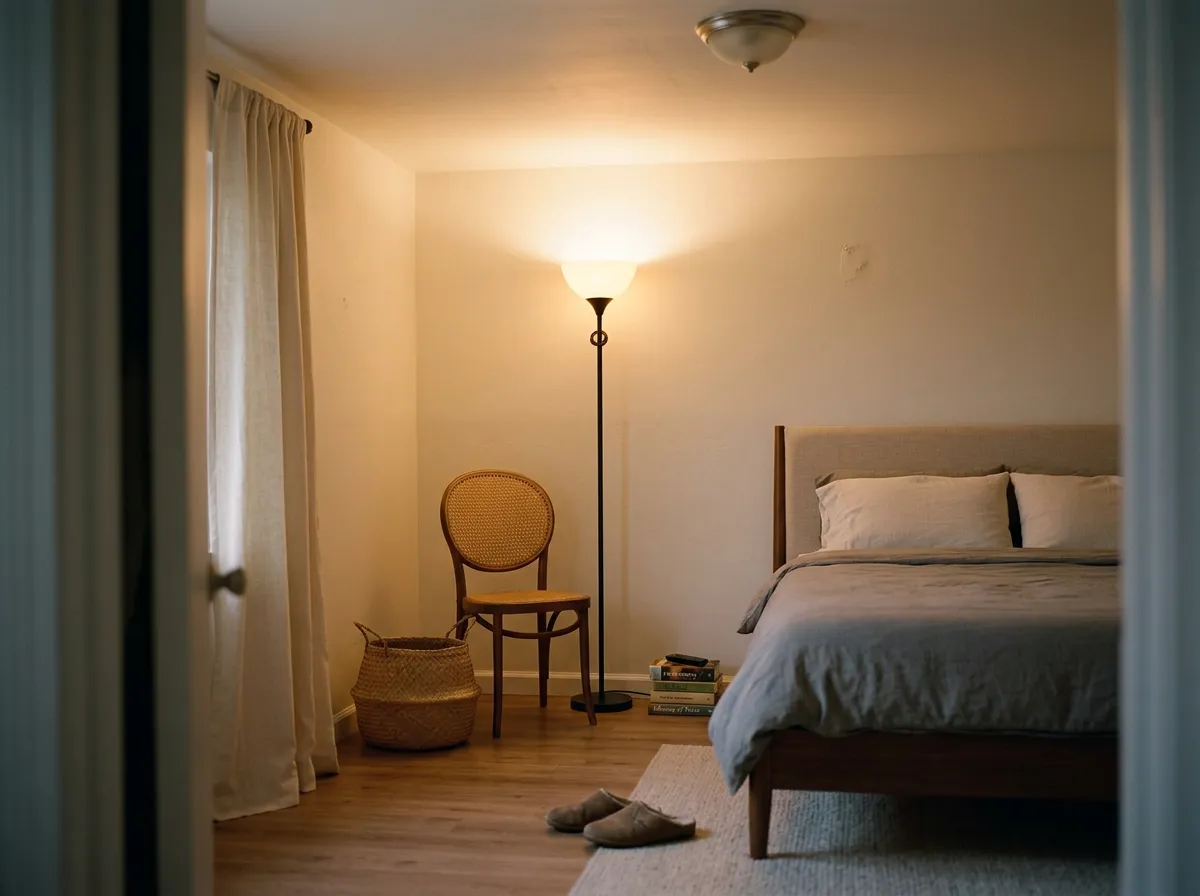
Stand a torchiere in it and aim the light at the ceiling. Every small bedroom has one corner the light never reaches, usually the one furthest from the window. A downward-facing lamp there just makes a bright puddle and a darker everywhere else.
Uplight fills a room the way daylight does. Bounce it off a pale ceiling and the whole room lifts, softly, with no visible hot spot. It's the best single trick for a room with one bad overhead and no other options.
- Corner placement, not beside the bed. A floor lamp next to a nightstand is doing the lamp's job twice
- Slim base. Anything wider than a dinner plate is eating floor you don't have
- Remote or a foot switch, because the switch on the pole is always behind the lamp when you want it
Skip this if your ceiling is dark or heavily textured. Uplight needs something pale to bounce off. Against a dark ceiling it mostly lights the lamp itself, and you'd do better with a shaded lamp at eye level.
How many lights does a cozy bedroom actually need?
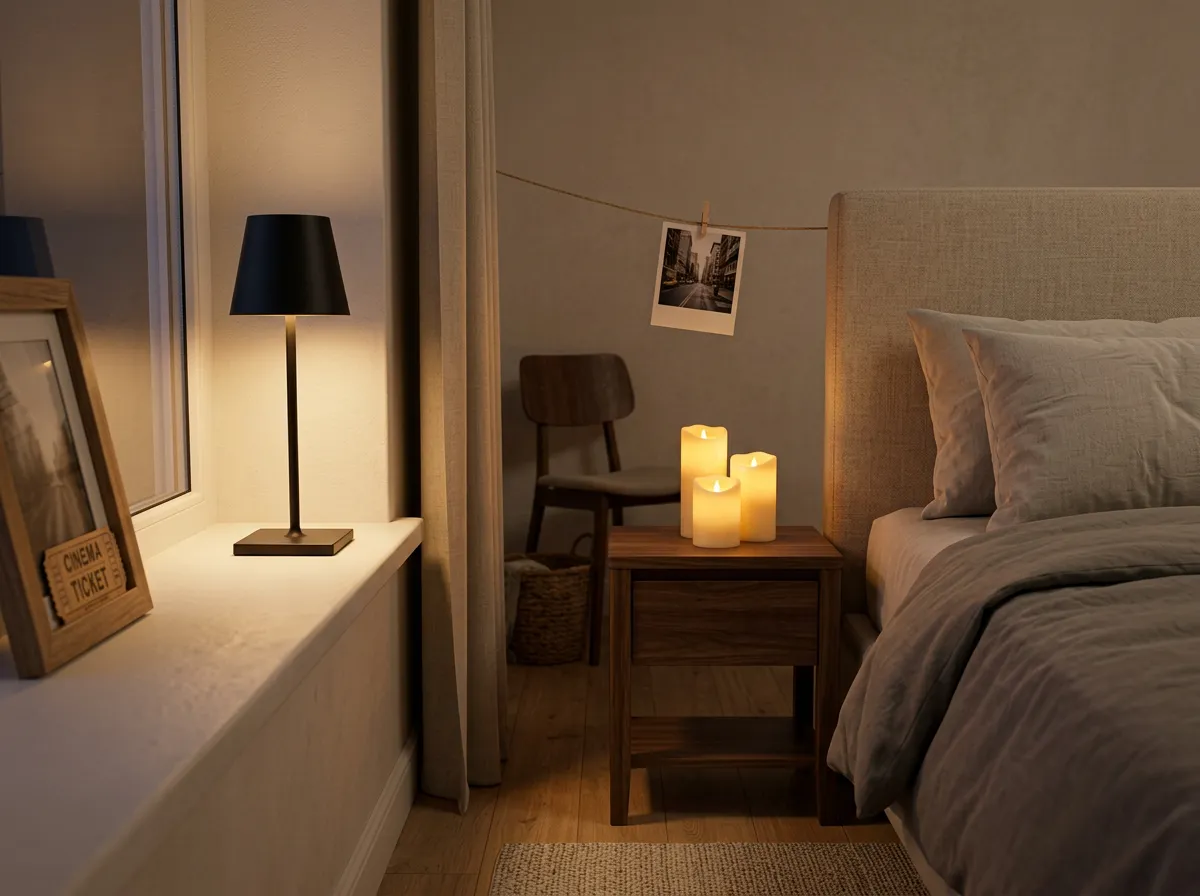
Three or four separate sources, none of them the ceiling. That's the count where a room stops looking lit and starts looking warm. Fewer than three and you get pools of light with dark gaps between them. More than five and it reads cluttered.
The last two layers are the ones nobody plans for. A light for the spot with no outlet, and a light that isn't electric at all. Both are cheap, and both move around with you when the furniture does.
- Cordless lamps go where outlets don't: a windowsill, a shelf, the floor beside a chair. Charge them like a phone
- Flameless candles on a timer cover the flicker most leases ban outright. Get real wax, because plastic reads as plastic up close
- Then stop. Once every corner has something, one more lamp makes the room busier, not cozier
Put them on a habit, not a switch. Smart bulbs and remotes are nice. What changes the room is reaching for two lamps when you get home and leaving the wall switch alone. The layers only pay off if the ceiling light stays off.
The real test comes on the first properly dark evening in October, when you get in at six and it's already night outside. If your hand still goes to the wall switch out of habit, the room isn't there yet.
Bulbs first, since every lamp you own is currently working against you. Then one layer at a time, and stop when the room feels right at that hour. You'll know. Nobody has ever needed a diagram to work out whether a room is good to sit in at night.