Cozy Bedrooms
Cozy Bedding Ideas: The 5 Layers That Make a Bed Look Like the Photo
This post contains affiliate links. As an Amazon Associate we earn from qualifying purchases, at no extra cost to you.
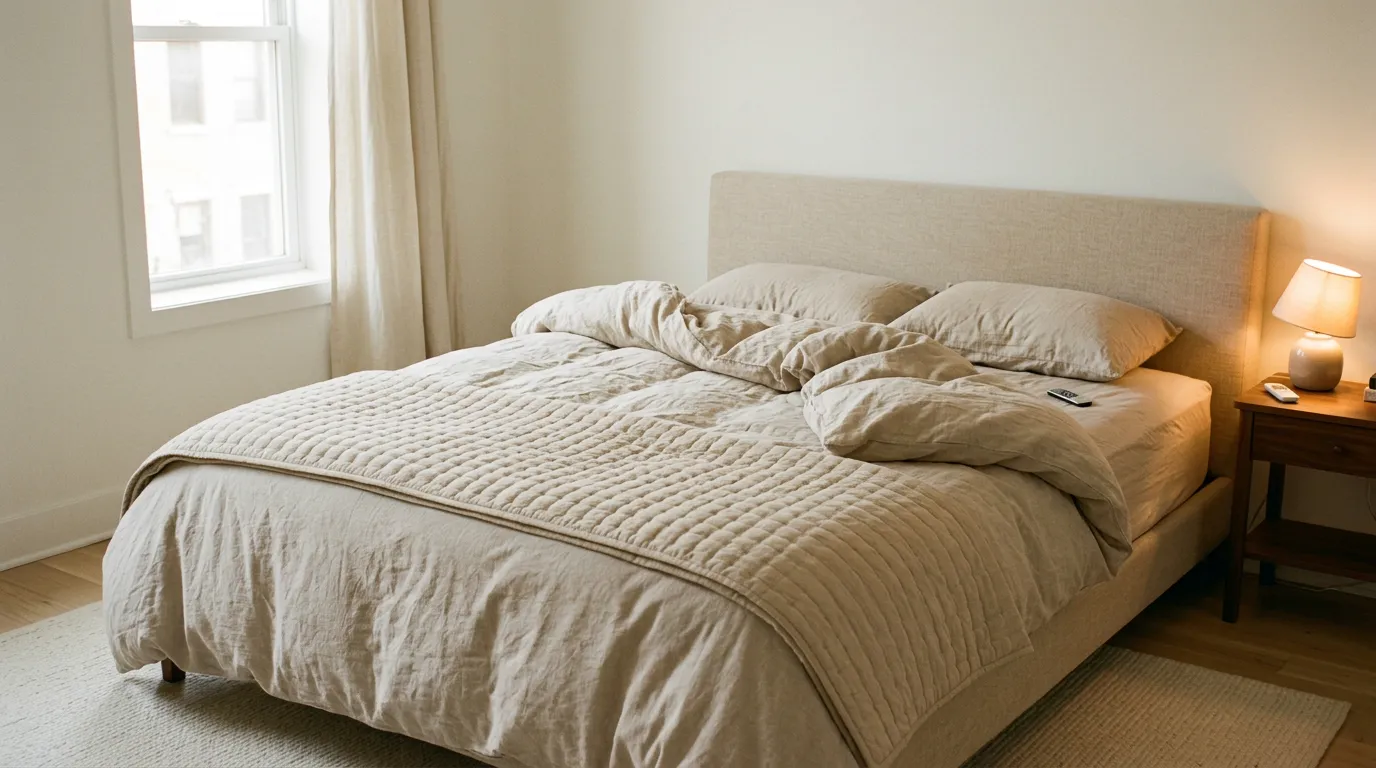
Cozy bedding ideas usually fail for one boring reason: you bought the pretty part and skipped the structure. The bed in the photo you saved has five layers on it. Yours probably has two, and no amount of nice fabric covers for a missing layer.
Bottom to top, a bed that reads cozy has five layers: soft sheets, a lofty duvet insert, a washed cotton cover, a quilt folded across the foot, and two big square pillows standing behind the ones you sleep on. Order matters more than brand. Most flat beds are missing the insert and the back row of pillows.
That's good news if you rent. You can't move the radiator or repaint the walls, but the bed is entirely yours. Change what's on it and the room changes with it, and all of it comes with you when the lease ends.
Below are the five layers in the order they go on, and what to look for at each one. Start at whichever layer you're missing.
How do you make a flat bed look like a hotel bed?
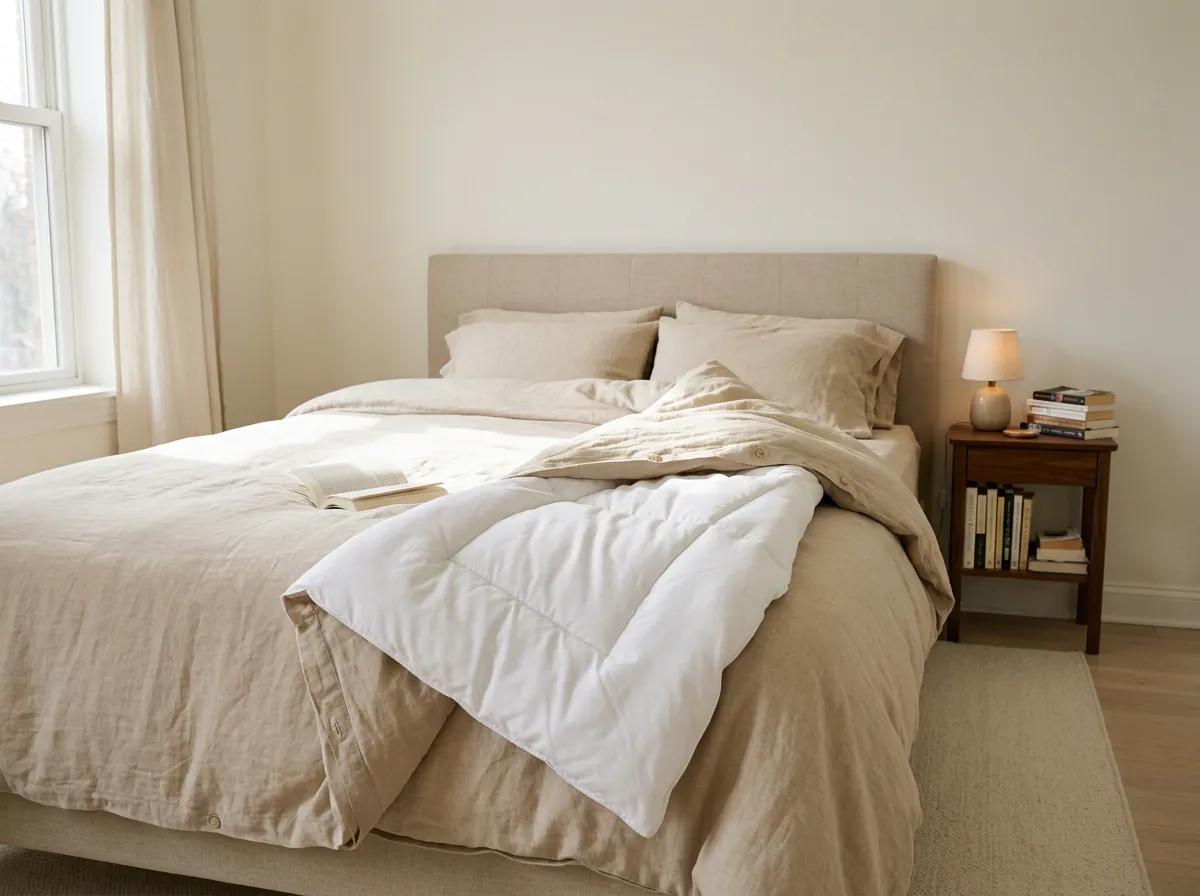
Loft is the whole answer. A hotel bed holds that shape because something thick and light is pushing the cover up from underneath. The cover is only fabric. The shape comes from the insert inside it, which is the layer nobody photographs and everybody skips.
Most flat beds are a duvet cover with a thin blanket shoved inside, or a comforter that gave up two winters ago. Neither one puffs, and thread count won't rescue either of them. If your bed looks deflated by breakfast, start here.
- Corner tabs are the whole game. Without them the insert slides into a lump at the foot of the cover by morning. With them you just pull the bed up and walk away
- All-season beats winter weight unless your bedroom genuinely runs cold. A too-warm insert gets kicked off at 2am, and a bed with the duvet on the floor isn't cozy
- Size up if your bed sits low. A queen insert on a full mattress gives you drape over the sides, and that drape is most of what reads like a hotel bed
Does the insert have to be white? No, but white is the flexible choice. It disappears under any cover you buy later, so you never have to match it to anything again.
How you put it on matters too. Shake the insert out flat before you button the cover, then give the whole thing one hard snap from the head of the bed. The filling spreads out and stays where you put it.
What are the best colors for cozy bedding?
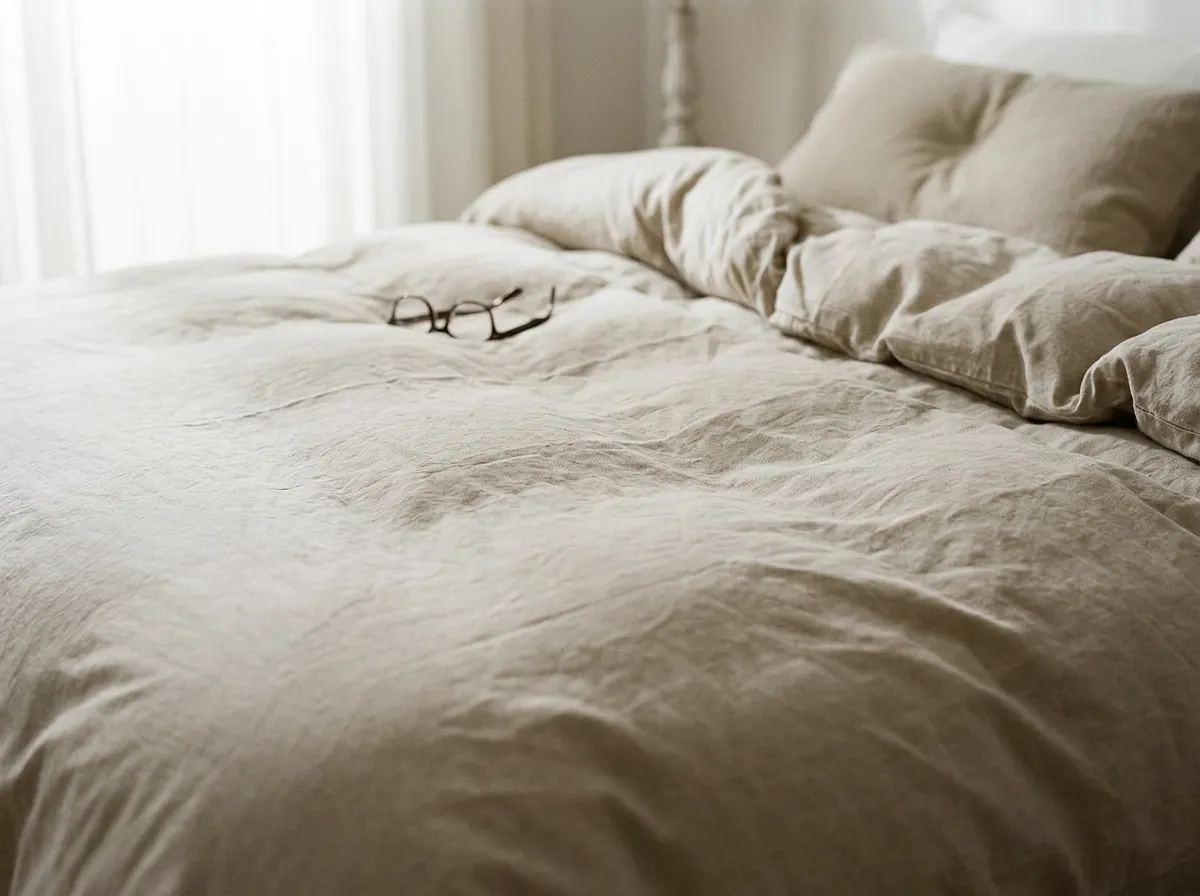
Warm neutrals, and oatmeal beats both white and gray. Pure white turns faintly blue once the sun goes down. Gray is the safe pick that reads a little cold in every room it lands in. Oatmeal, sand, and greige hold onto warm light.
Think hardest about this layer. The cover is the biggest single surface in the room, so it sets the temperature for everything else. The rug and the curtains have to agree with it, not the other way around.
- Washed cotton over crisp percale if you want the rumpled look. Washed cotton is supposed to look slept in, so an unmade bed still reads as deliberate
- Skip anything with a sheen. Satin and sateen bounce light straight back at you, and light bouncing off a bed is the opposite of soft
- One color, one texture, done. Patterned covers date quickly and fight with every layer you add on top of them later
What about dark bedding? It works, but it needs more light in the room to survive. In a small rental with one window, a charcoal bed stops looking moody around November and starts looking heavy.
Do the pillowcases have to match the cover? Keep those two the same. The contrast you want comes from the layers on top, not from the part your head lands on.
What sheets keep a bed warm in winter?
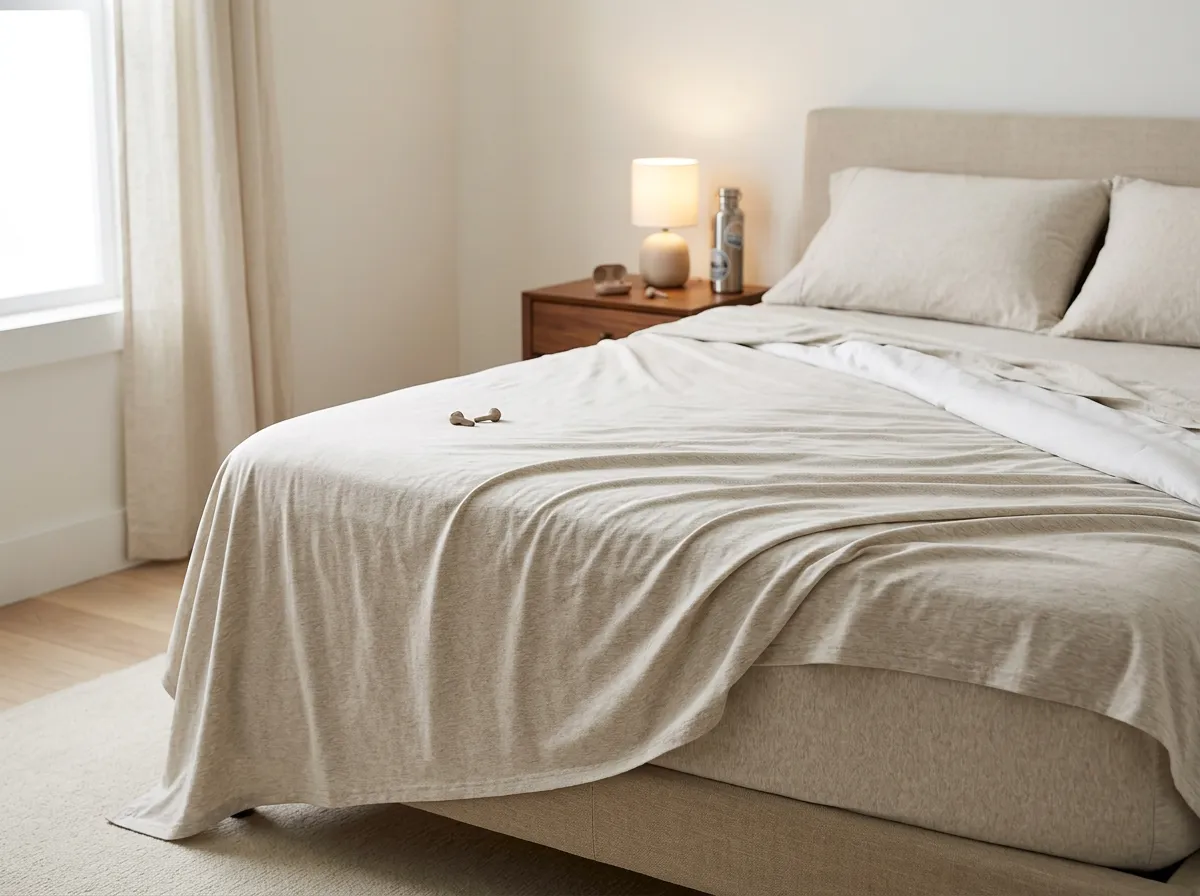
Knit sheets are the warm ones. Jersey is knit like a t-shirt, so it holds a little air and starts out warm instead of borrowing ten minutes of your body heat first. Crisp percale is lovely in July and brutal in January.
That cold-sheet flinch is a real reason people put off going to bed. It makes the bed feel unwelcoming at exactly the moment you want it most.
- Jersey for warmth, flannel for more. Flannel is warmer still, but it pills and it sheds. Jersey holds up wash after wash and never goes fuzzy
- Check the pocket depth against your mattress, especially if you use a topper. A fitted sheet that pops off a corner at 3am undoes the whole layer
- Buy the sheet color to disappear. Nobody sees this layer once the bed is made, so match it to the cover and stop thinking about it
Do you still need a flat sheet? Only if you like one. Skipping it means washing the duvet cover more often, so decide which chore you mind less.
A topper is the upgrade underneath this one. If the mattress came with the rental, a topper does more for how the bed feels than any sheet will. Sheets fix the first ten seconds. A topper fixes the night.
Our picks
Similar finds on Amazon
How do you layer a bed with a quilt and a throw?
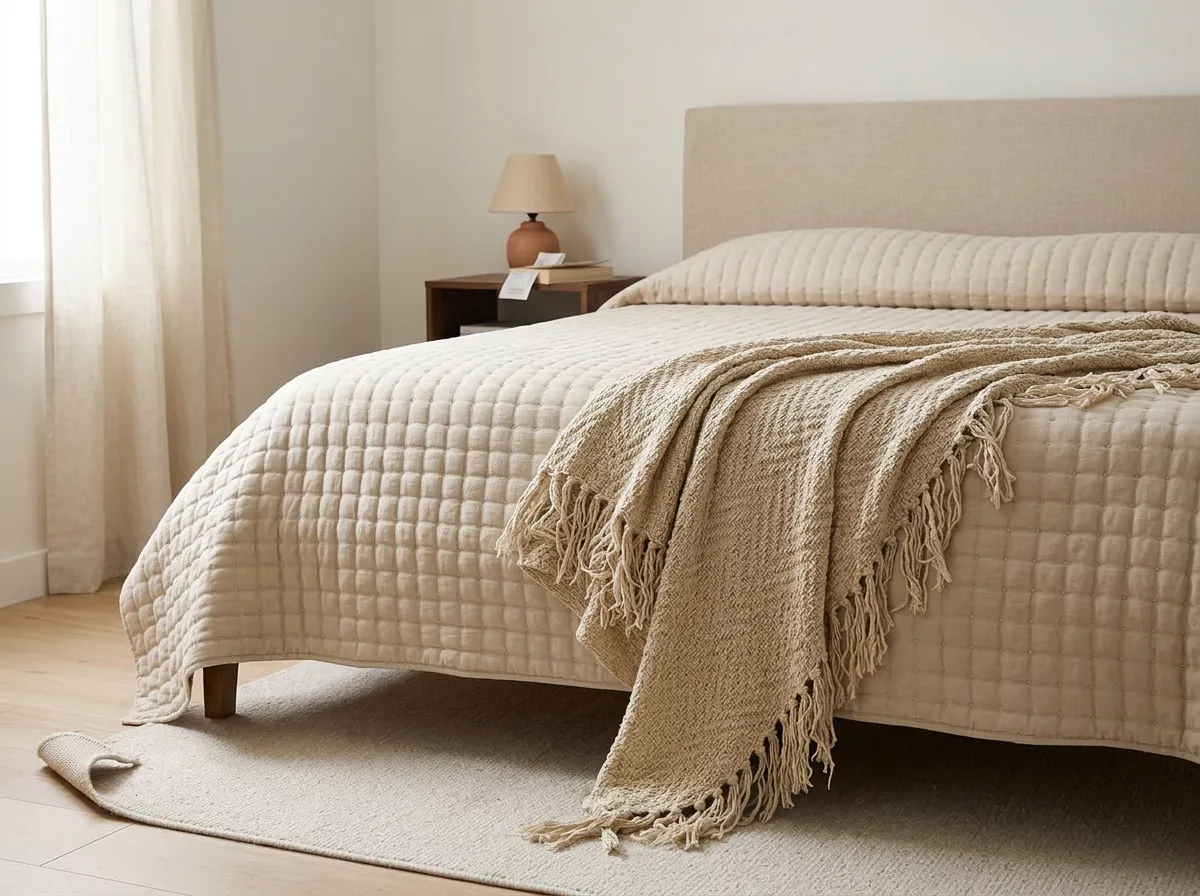
Fold the quilt flat across the bottom third, then let the throw fall off one corner on the diagonal. Two layers at the foot, never three. The quilt goes down wide and even. The throw goes on top of it, loose and slightly crooked.
- Pull the duvet up and smooth it, then fold the top edge back on itself by about a foot so the sheet shows
- Lay the quilt across the foot, covering roughly the bottom third of the bed, with the edges hanging evenly on both sides
- Drape the throw over one corner of the quilt on the diagonal, letting a little of it pool toward the floor
- Stop there. The urge to add a fourth thing is where beds start looking like a bedding aisle
The quilt is also the honest answer for anyone who overheats. It gives you the third layer visually without the warmth of a second duvet, so you get the look and still sleep.
Why does the throw have to be textured? Because a beige bed with three smooth layers reads as one solid blob from the doorway. A woven or fringed edge gives your eye a line to catch, and that line is what gives the bed depth.
Fringe or no fringe? Fringe if the rest of the bed is very smooth. Skip it if there's already a lot going on, or if you have a cat with opinions about tassels.
What pillows make a bed look styled?
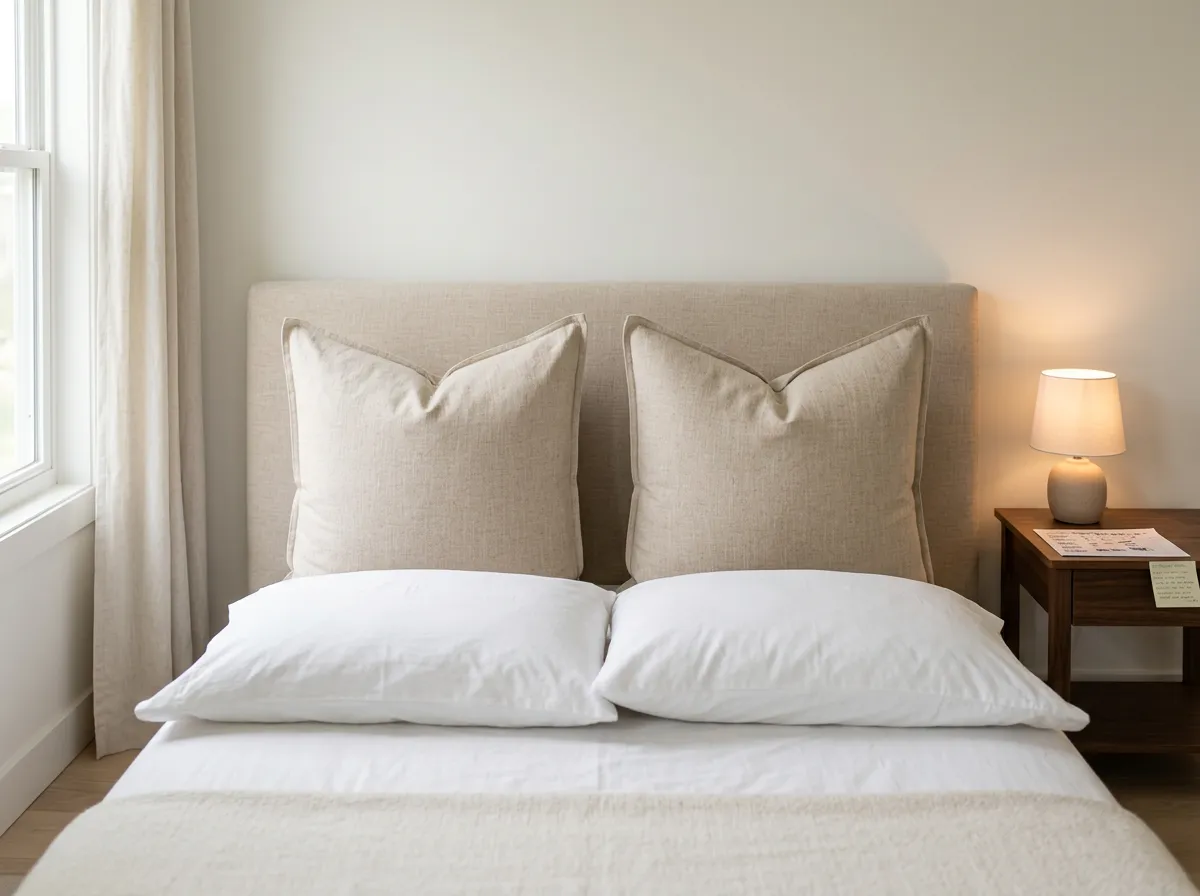
Two big squares standing upright behind the ones you sleep on. Euro shams run 26 by 26, which is big enough to hold themselves up against the headboard. Smaller squares flop forward and sulk. That back row is the single thing separating a made bed from a styled one.
It's also the cheapest layer here by a wide margin, especially if you buy covers and stuff them with pillows you already own. Nobody can tell what's inside a sham.
- Covers, not whole pillows. Covers fold flat in a drawer and swap in a minute when you want the bed to feel different. Whole pillows need closet space a small bedroom doesn't have
- Two euro shams for a queen, three for a king. Two on a king leaves a gap in the middle that looks like something fell off the back
- Texture over pattern. A slubby weave or a flange edge does more from across the room than any print, and it won't fight the quilt
Where do the sleeping pillows go? In front, lying flat, overlapping the euros a little. That front-to-back stagger is what gives the head of the bed depth. Everything standing in one straight line looks like a display.
Is a lumbar pillow worth adding? Only if the bed still looks bare after the euro shams go in. One long pillow in front is plenty. Two more small ones is where a bed stops being a bed.
You don't need all five in one weekend, and buying them all at once is how people end up with a bed nobody wants to unmake. Add the layer you're missing, live with it a week, then decide whether it needs the next one.
Forget how it photographs. The bed is finished when getting into it becomes the part of the day you start looking forward to at about four in the afternoon.
A made bed under a bare ceiling bulb still reads cold, so the next thing to fix is the bedroom lighting. Making up a spare room instead? The layers change: see the guest bedroom ideas.