
Apartment Living
Cozy Living Room Ideas for Renters: 6 Fixes for a Space You Didn't Choose
This post contains affiliate links. As an Amazon Associate we earn from qualifying purchases, at no extra cost to you.
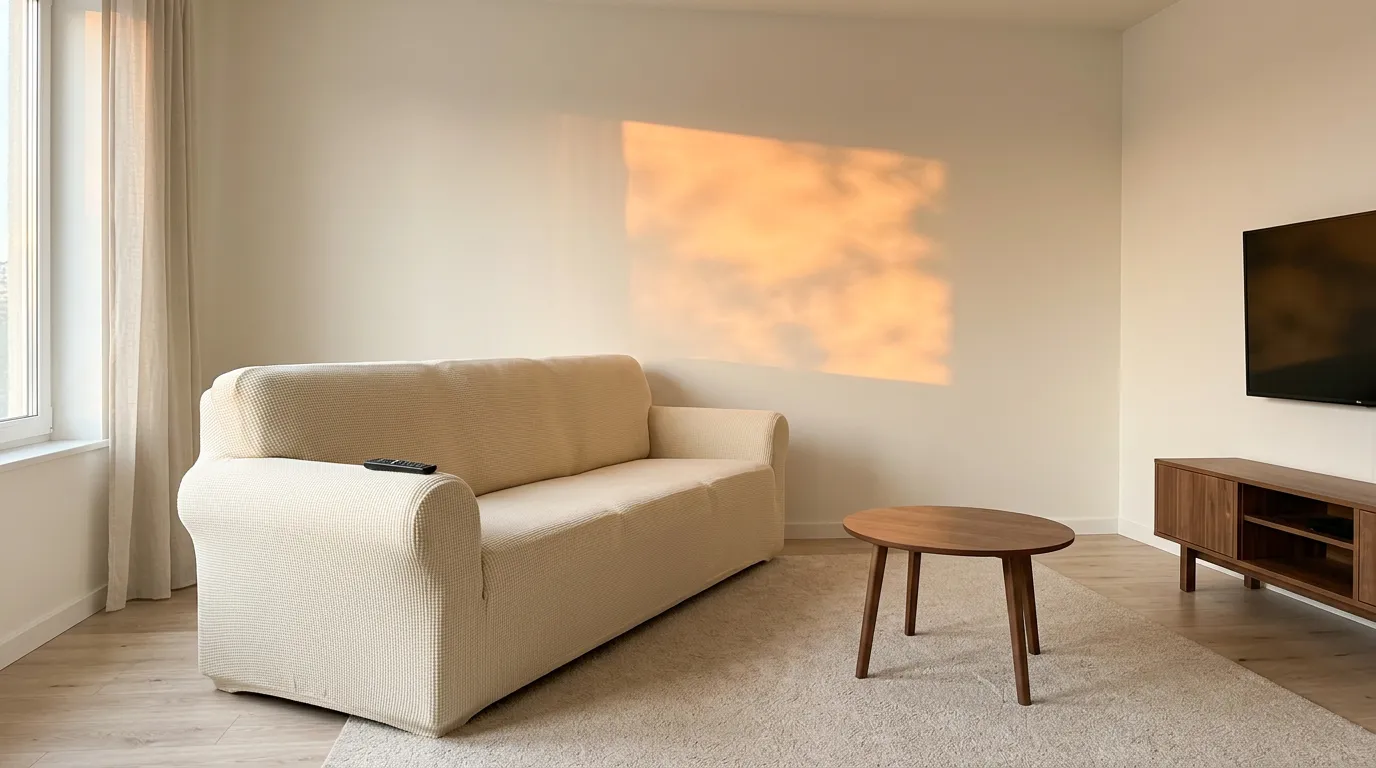
Cozy living room ideas mostly assume the living room is yours: that you can paint the wall behind the sofa, mount the TV properly, and replace the couch if you hate it. In a rental, none of those are on the table, and the three things that make the room look unfinished are exactly the three you are not allowed to change.
How do you make a rental living room feel cozy? It usually looks unfinished for four reasons, and all four have a removable fix. Cover the sofa you didn't pick, put something on the biggest bare wall, get the cords off the wall in a straight line, and give the small stuff a lid. None of it needs a drill, a landlord conversation, or a deposit.
So this list of Amazon home finds is organized by problem, not by category. Six things, five problems, and every one of them comes back off the wall when the lease ends. For a small living room the order matters most: fix the sofa and the wall before you buy anything decorative. If the corner by the window is the part going to waste, that one has its own answer in our reading nook ideas.
What is the fastest way to change a living room you can't renovate?
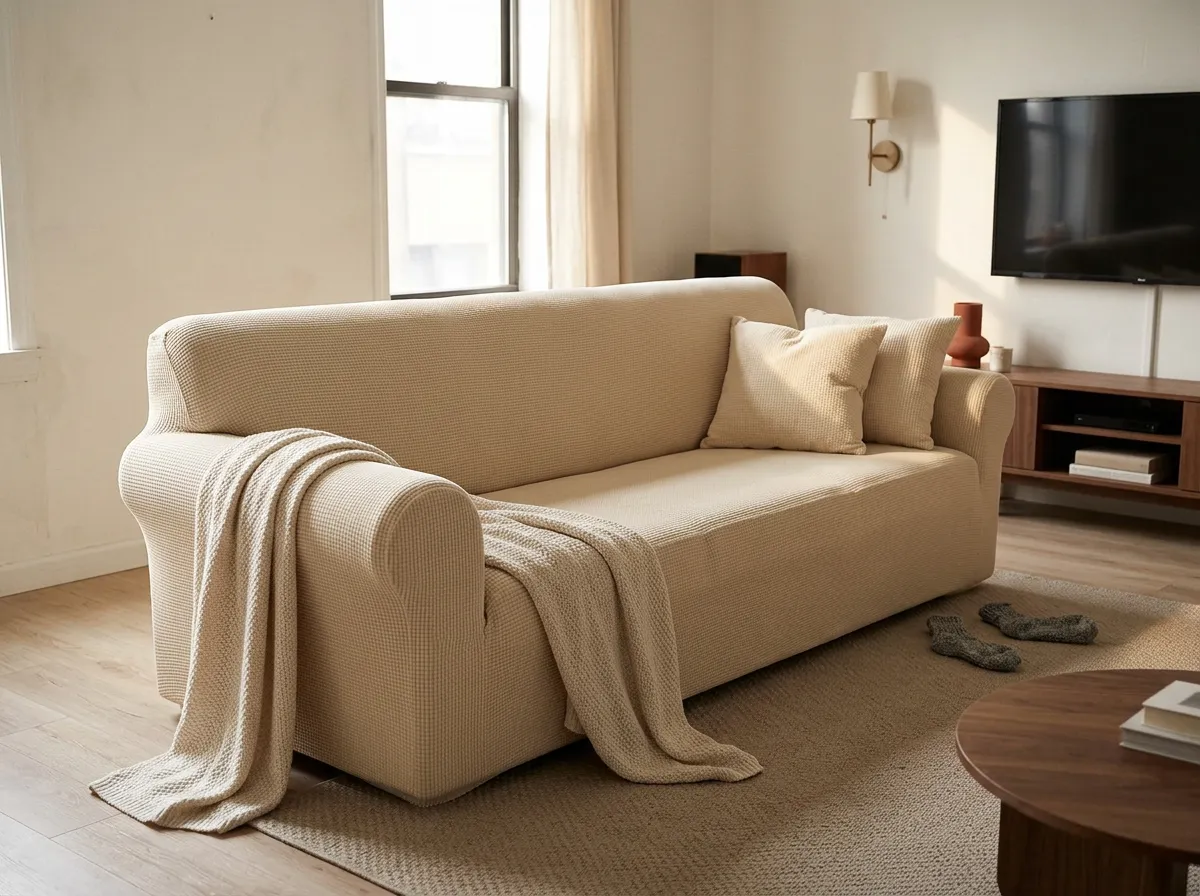
Cover the sofa. It is the largest surface in the room by a wide margin, so it sets the color of everything else. A landlord grey three seater will keep the whole room grey no matter how many warm pillows you pile on it.
This is also the one fix where the wrong version wastes an afternoon, so it is worth knowing what you are buying before you click.
- One piece stretches over everything. The cover goes on like a giant sock, tucks into the crevices, and stays put with an elastic hem. Best when your cushions do not lift out, or when you want the sofa to read as one solid shape
- Four piece means the cushions come off. You get a body cover plus separate cushion covers. It looks sharper on a sofa with removable cushions, and it is fussier to wash and put back
- Measure across the back, arm to arm. Stretch covers are sold by that span, not by how many people fit. A wide two seater often needs the three cushion size
- Push the fabric deep into the seams. Most sets come with foam rods for this, and it is the difference between a slipcover and a bedsheet
Pick a cream, beige, or camel over the dark grey the listing photos usually show. Dark covers hide dog hair, which is what the reviews are mostly about, but they also keep the room heavy.
If the sofa is what makes the room feel like a waiting area, a warm neutral is doing the actual work.
Pick this if the sofa came with the apartment and you have been avoiding photographing that side of the room. It goes on in an afternoon, washes, and leaves with you.
One honest caveat: stretch covers look best on a sofa with simple square arms. A rolled arm or a deep chesterfield will fight it, and you will see the outline of the old sofa through the fabric.
How do you fill a big bare wall without a dozen nail holes?
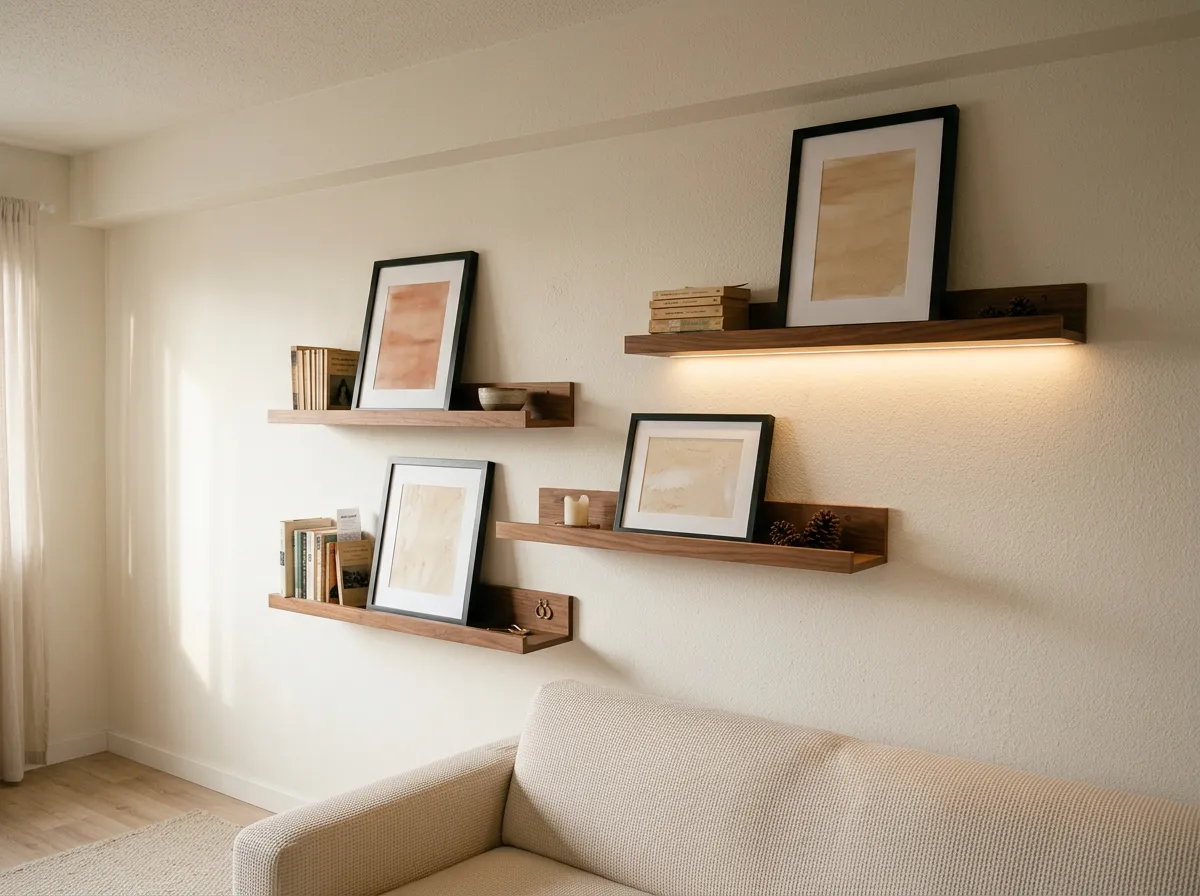
Put shelves up instead of hanging each frame. A gallery wall of individually hung frames costs you one hole per frame and locks the layout in place. A few short shelves cost you a handful of holes total, and then everything on them can be rearranged for free.
- Hang the shelves so the top one sits at eye level when you are sitting down. Living rooms are seated rooms, and art hung at standing height always reads slightly too high
- Space them evenly and keep the gap smaller than the shelf is long, or the row stops looking like a set
- Lean the frames instead of hanging them, overlapping the edges slightly so the row has depth
- Mix in one object that is not a frame (a small stack of books, a candle) so it reads as a shelf, not a display case
Uniform frames are what makes it look intentional. Nine matching frames in one finish read as a decision. Nine mismatched frames read as whatever was in the closet.
On the shelf finish: these come in black, white, grey, and two wood tones. A warm wood shelf under black frames gives contrast without the wall going graphic. Black on black is sharper, but can read severe over a sofa you are meant to relax on.
Pick the shelves if the wall behind or beside your sofa is the last empty thing in the room and you keep putting off dealing with it. Pick the frame set if you already own shelves and the problem is that they are holding nothing worth looking at.
On the holes: short shelves like these are light enough for drywall anchors, and anchors patch with a dab of filler at move out. Adhesive strips are the zero hole option, but check the weight rating first.
How can you hide TV wires without drilling into the wall?
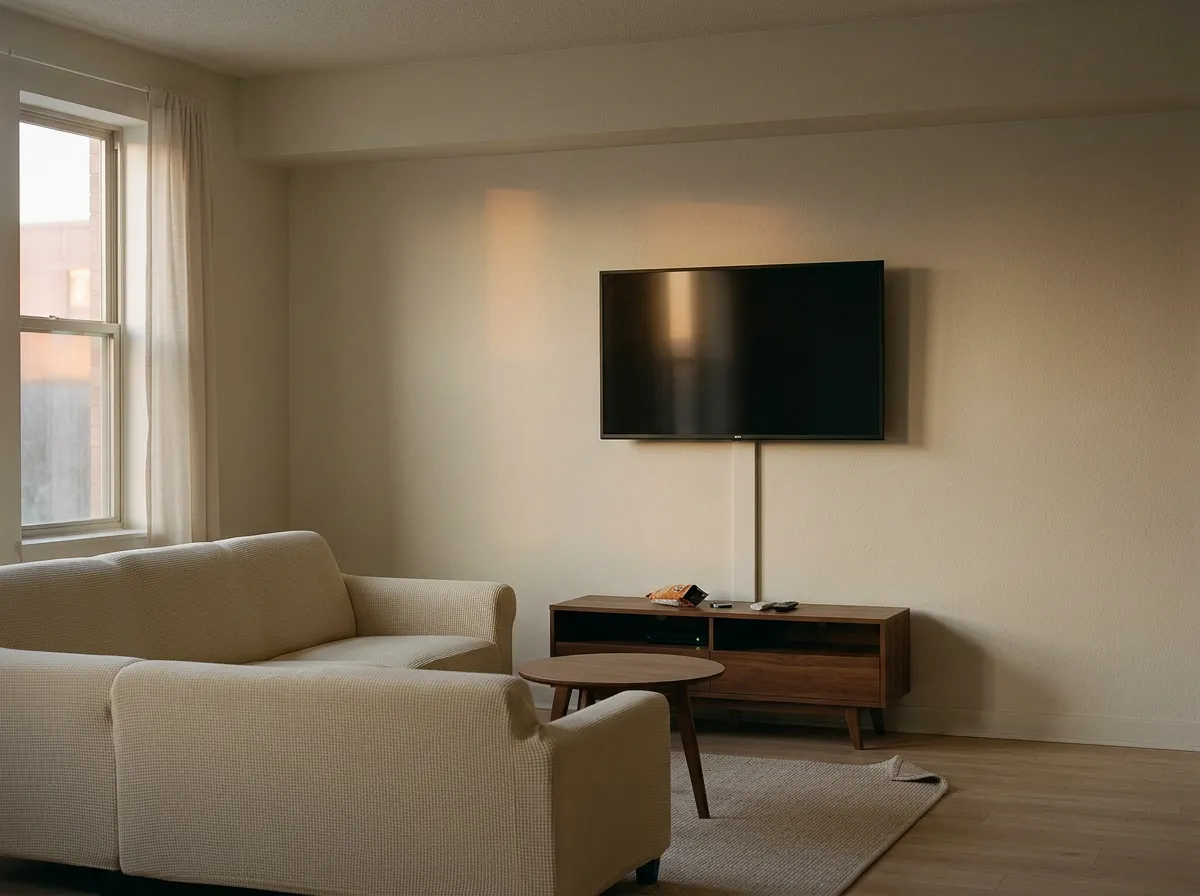
Use a stick on cord raceway, not a fabric sleeve. A raceway is a rigid channel with adhesive backing: the cords clip inside, the lid snaps shut, and what you see is a flat strip you can paint the color of the wall. No wall cavity, no electrician, no holes.
Fabric cord sleeves are the other popular answer and they do not solve this problem. They gather the cords into one soft rope, which still hangs, still casts a shadow, and still reads as clutter in photos.
- Run it straight down, never diagonally. A vertical line disappears because the eye files it as an edge. A diagonal line is the first thing anyone sees
- Cut the channel to length before you peel anything. Most kits are a set of sections plus corner pieces, and they cut with a hacksaw or a sharp utility knife
- Paint it before it goes up, not after. Latex wall paint grips the plastic fine, and painting on the wall means taping off the wall
- Wipe the wall with alcohol first. Adhesive fails on dusty or freshly painted drywall more often than it fails on anything else
Renter warning worth taking seriously: strong adhesive on painted drywall can lift paint when it comes off. Warm the strip with a hairdryer and pull it slowly along the wall rather than away from it, and keep a little touch up paint for move out.
Pick this if the only reason your living room looks messy in photos is the bundle of black cables under the TV. It is the cheapest fix on this list and probably the most visible.
If the mess is on the floor instead, the cords are not the problem, the power strip is. A lidded box with cutouts hides the strip and the plug tangle while letting the heat out, which a basket with a lid will not do safely.
Where do you put a drink when there's no room for a side table?
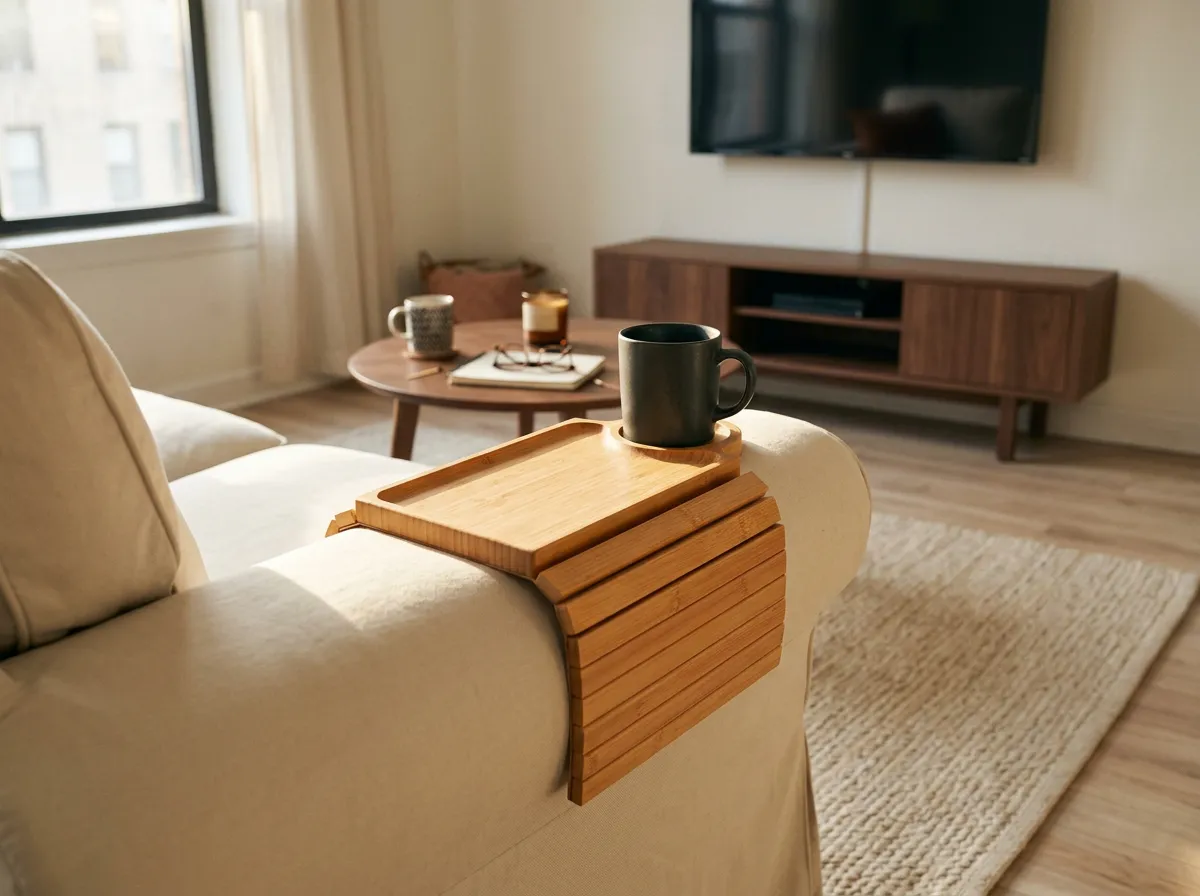
Use the sofa arm as the table. An arm tray is a flat bamboo bridge that sits across the armrest and gives you a surface exactly where you already put things down.
It takes up no floor space at all, which is the whole point in a room where a side table would block the walkway.
This is a small object with a high failure rate if you buy it blind, and the reason is always the same: the arm.
- Measure the width of your sofa arm across the top. Trays are sized to a range, and a tray narrower than the arm wobbles while one much wider overhangs and tips
- Check that the arm is firm and flat. A padded, rounded, or slouchy arm will not hold a tray level no matter what the listing photo shows
- Look for a folding or hinged design if your arm is slightly rounded, because the two flaps drop down and grip the sides
- Get one with a recessed cup ring if anyone in the house reaches for a drink without looking
Pick this if your coffee table is out of reach from the seat you always end up in, or if you have been using the floor and pretending that is fine.
Skip it if your sofa has wide flat arms already. In that case you do not need the bridge, you need a small tray to corral what is on them, which is a different and cheaper object.
Our picks
Similar finds on Amazon
How do you keep a living room tidy when nothing has a home?
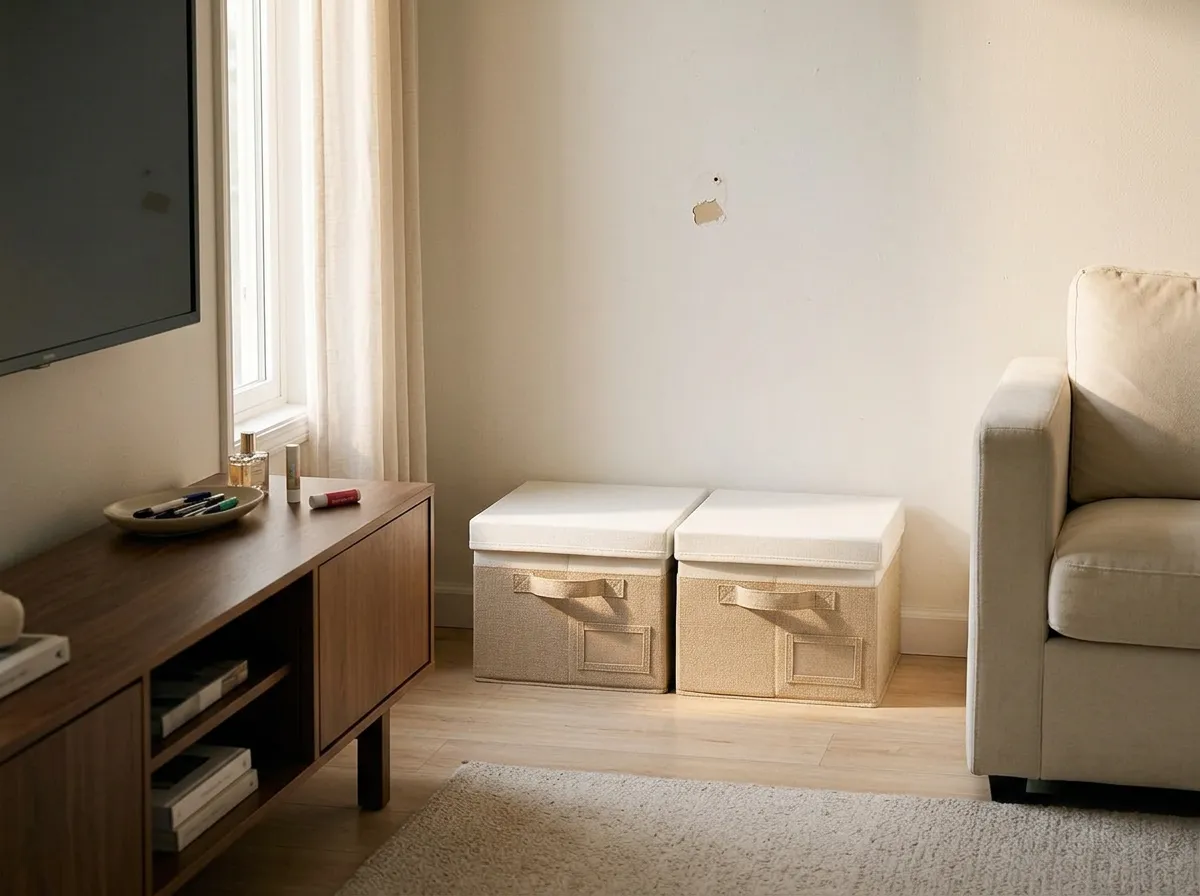
Give the small stuff a lid, not a basket. Remotes, chargers, spare batteries, and the pile of cards nobody deals with will find a surface whether you plan for them or not.
An open basket holds all of it and still shows you all of it, so the room reads as busy even after you tidy.
Lidded boxes work better here for a reason that has nothing to do with storage: a closed box is a rectangle, and matching rectangles read as decor.
- Buy them in pairs, in one color. Two identical boxes look deliberate. Four different bins look like storage
- Measure the shelf first, including the height under the shelf above it. Boxes that do not fit the shelf end up on the floor, which is where they stop being tidy
- Stackable ones earn their space in a small room, because the footprint stays the same as the amount of stuff grows
- Keep one box mostly empty and treat it as the landing spot for whatever comes into the room. It is the only system that survives a busy week
Pick this if you tidy the living room and it somehow still looks cluttered ten minutes later. That gap is almost always small objects with no assigned place.
These are the shelf version, not the floor version. If what you need is somewhere to throw a blanket at the end of the night, a large open floor basket is the better shape and you do not want a lid getting in the way.
Our picks
Similar finds on Amazon
If you only do one of these, cover the sofa. It is the biggest surface, it changes the color of the whole room, and it takes an afternoon.
The rest stack in whatever order the room annoys you most. Cords are the cheapest and the most visible. Shelves take the longest to get level and pay off the longest. Lids and a tray are the ones you stop noticing, right up until you visit someone who does not have them.
Every one of these comes back off at the end of the lease, which is the only real requirement when the living room is not technically yours.